
Uncategorized
Hyperspectral Camera Training for Indoor Farming

On August 12, 2024, the Smart Agriculture Research Center (SmartAgri) UGM held a training session on the use of Hyperspectral Camera. This training is part of an initiative to increase agricultural productivity and ensure food security through advanced technology. The event took place at the Laboratory of Environmental Engineering and Agricultural Buildings (TLBP), Department of Agricultural Engineering, Faculty of Agricultural Technology UGM, where participants learned how to utilize this cutting-edge equipment for indoor agricultural applications. Hyperspectral Camera is an advanced tool that captures a broad spectrum of light from plants, enabling researchers to analyze plant health more effectively. By using this technology, farmers can monitor plant conditions in real-time, allowing them to make informed decisions that can increase agricultural productivity. This aligns with the Sustainable Development Goals (SDGs), particularly those focused on sustainable agriculture and food security.
During the training, the team from Smart Agriculture Research Center provided insights into the principles of hyperspectral imaging and its applications in agriculture. Participants were taught how to interpret data collected by the camera, which can reveal information about plant stress, nutrient deficiencies, and overall health. This knowledge is crucial for optimizing plant management practices in indoor farming systems.
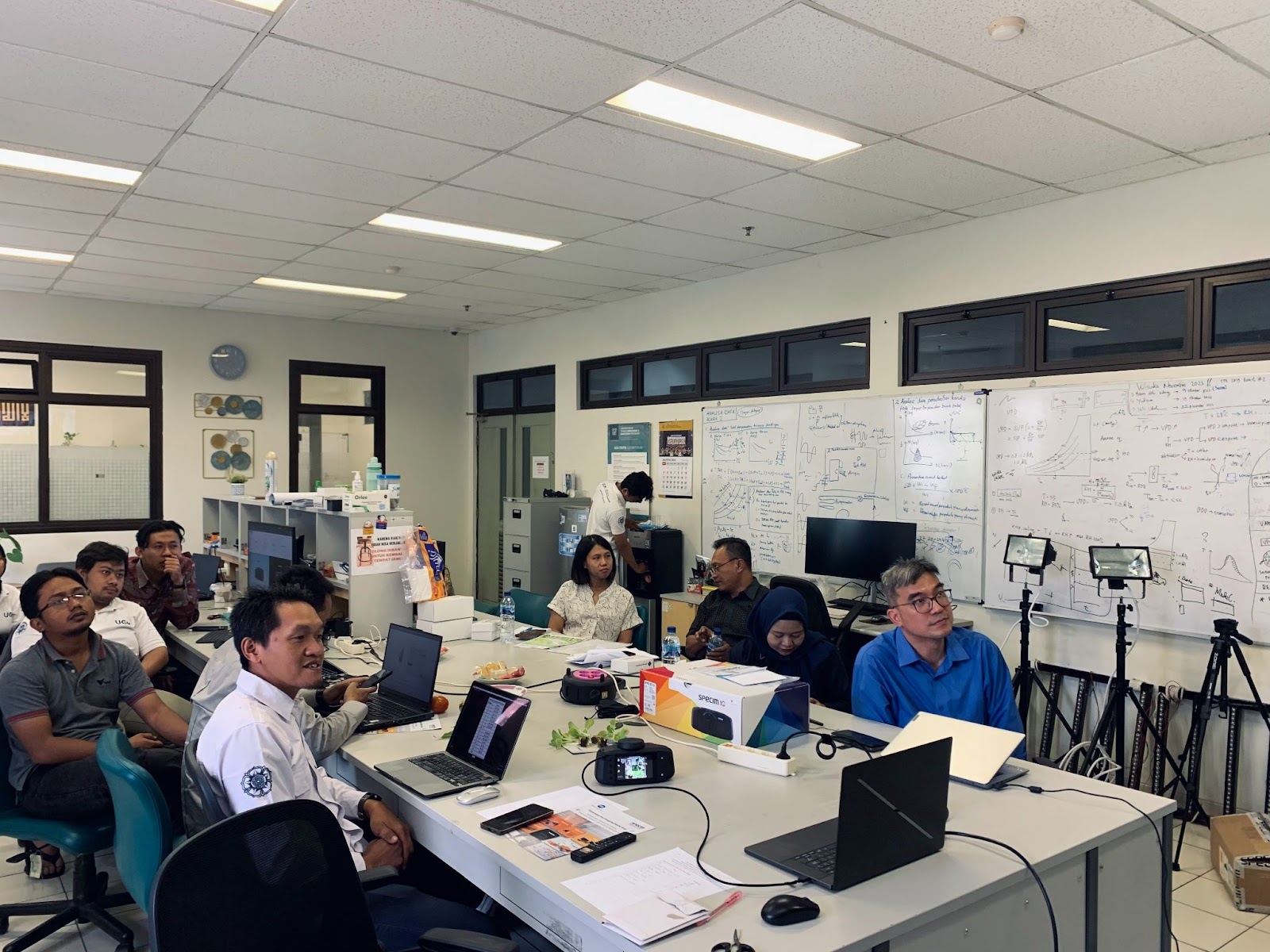
The training also emphasized the importance of education in advancing agricultural technology. By equipping students and researchers with the skills to use Hyperspectral Camera, UGM aims to foster innovation in agricultural practices. This educational approach is essential for developing future leaders in agriculture who can address the challenges of food security and sustainable agriculture.
Beyond technical training, discussions were also held regarding the broader implications of using hyperspectral imaging in agriculture. Participants explored how this technology can contribute to sustainable agricultural practices, reduce resource waste, and increase crop yields. The integration of such advanced tools is crucial for meeting the ever-increasing global demand for food while minimizing environmental impact.
The event attracted diverse participants, including students, researchers, and industry professionals. Collaboration between academia and the agricultural sector is essential for driving advances in agricultural technology. By sharing knowledge and expertise, participants can work together to develop innovative solutions that increase agricultural productivity and ensure food security.
As the world faces mounting challenges related to climate change and population growth, the need for efficient agricultural practices becomes increasingly urgent. The training on Hyperspectral Camera is a step toward addressing these challenges by providing farmers with the tools they need to monitor and manage their crops effectively. This initiative is expected to have a significant impact on the future of indoor farming and sustainable agriculture.
In conclusion, the training on the use of Hyperspectral Camera at UGM represents a significant advancement in agricultural education and technology. With a focus on the intersection of education, technology, and sustainable practices, UGM is positioning itself as a leader in smart agriculture. The knowledge gained from this training will surely contribute to increased agricultural productivity and food security in the years to come.
Contributor: Dwiki Nugraha
Originally published on our previous site. Read the original