
Collaboration Research
Guest Lecture Series on Joint Supervision Program: Development of AI for Agriculture by Assoc. Prof. Dr. Parvez Islam from Ehime University, Japan
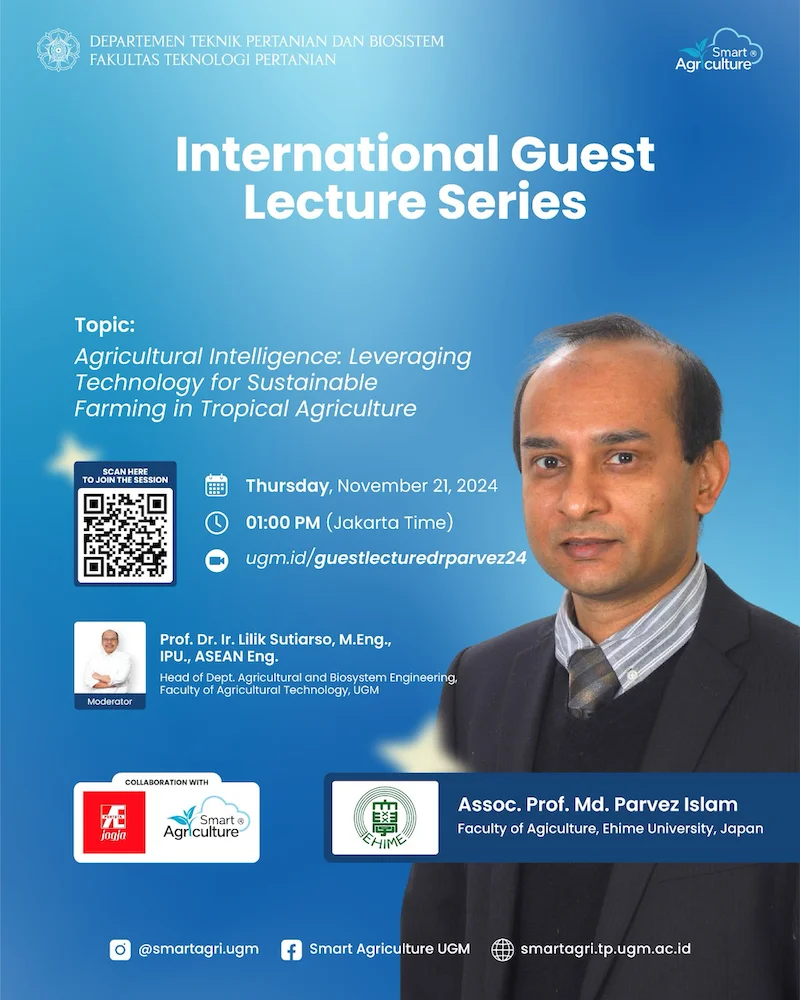
Yogyakarta, November 21, 2024 – The Department of Agricultural and Biosystems Engineering (DTPB), Faculty of Agricultural Technology, Universitas Gadjah Mada (UGM) in collaboration with Ehime University, Japan, held a guest lecture featuring Assoc. Prof. Mohammad Parvez Islam. The event was opened and moderated by Prof. Dr. Ir. Lilik Sutiarso, M.Eng, IPU, ASEAN Eng., who discussed the application of artificial intelligence (AI) in tropical agriculture, particularly regarding strategies for developing valid datasets and implementing AI systems in tropical agricultural environments.
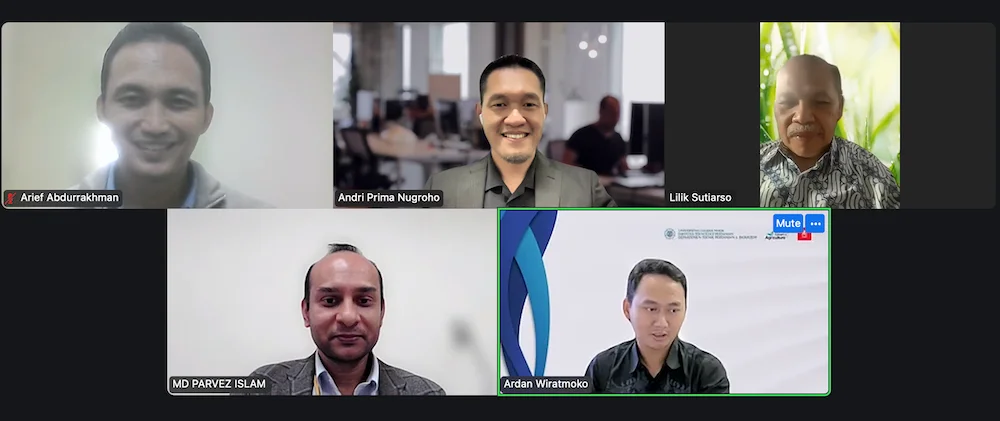
Opening and Moderation by Prof. Lilik Sutiarso, M.Eng.
Assoc. Prof. Parvez Islam, an expert in the field of AI and agriculture, shared his experience and expertise in building data-based AI systems. An interactive discussion involving participants from various academic backgrounds yielded valuable insights into the challenges and opportunities in developing AI for agriculture. One of the important points discussed was the importance of data validation and strategies for obtaining high-quality datasets to support the development of reliable AI systems.
The presence of Dr. Arief Abdurrakhman from Ehime University and ITS Surabaya, as well as lecturers and researchers from UGM, including Prof. Lilik Sutiarso and Dr. Andri Prima Nugroho, enriched the discussion and collaboration in efforts to develop sustainable agricultural technology. This guest lecture is part of UGM's efforts to improve the quality of research and education in the field of precision agriculture.
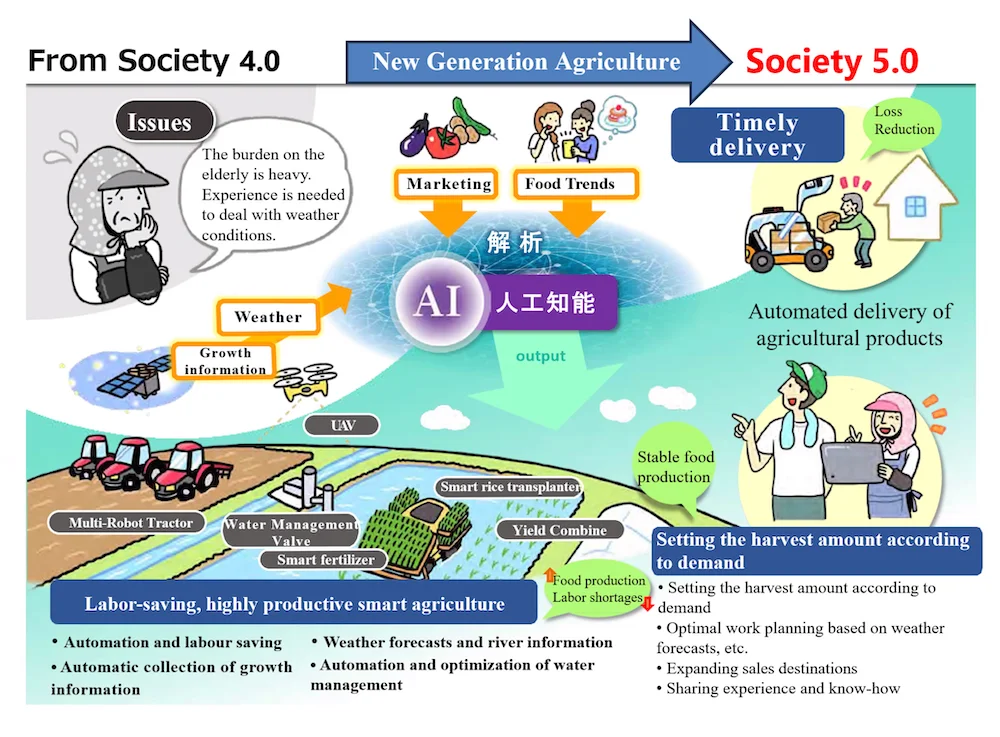
Material presentation by Prof. Parvez Islam
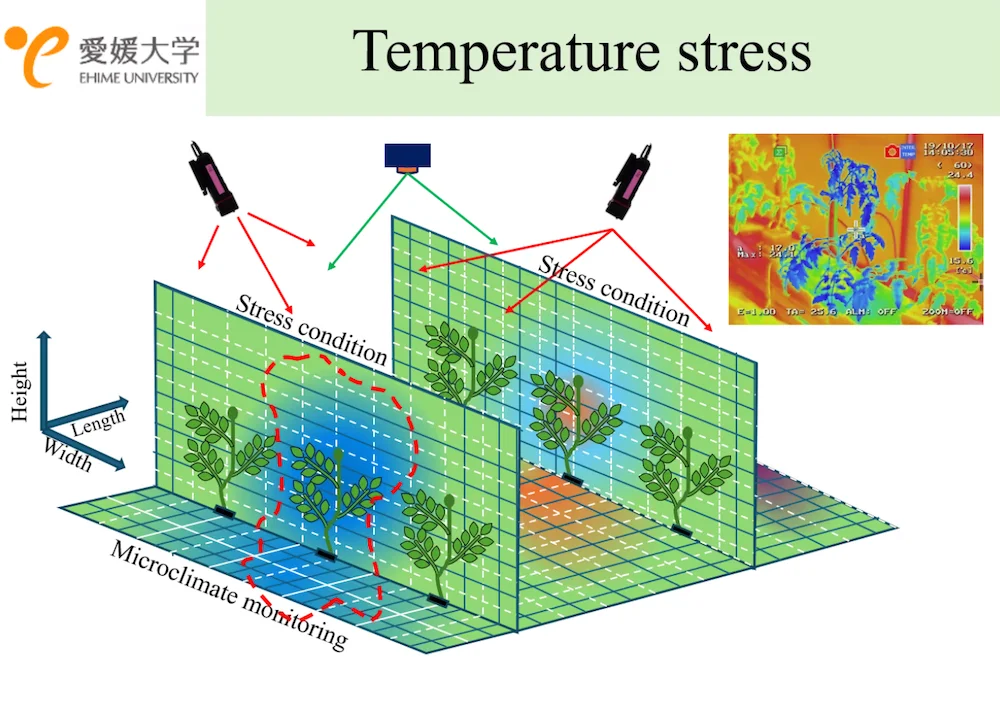
Lecture materials from Prof. Parvez Islam
During the lecture, Assoc. Prof. Islam emphasized the important role of agricultural productivity in ensuring food security, especially in tropical regions where climate change presents significant challenges. He highlighted how AI can optimize agricultural practices, increase crop yields, and reduce resource waste, in line with the Sustainable Development Goals (SDGs) aimed at ending hunger and promoting sustainable agriculture.
The discussion also addressed the integration of AI with traditional agricultural methods, demonstrating how technology can complement existing practices rather than replace them. Participants were encouraged to think creatively about how AI can be adapted to local agricultural contexts, ensuring that innovation is accessible and beneficial to smallholder farmers.
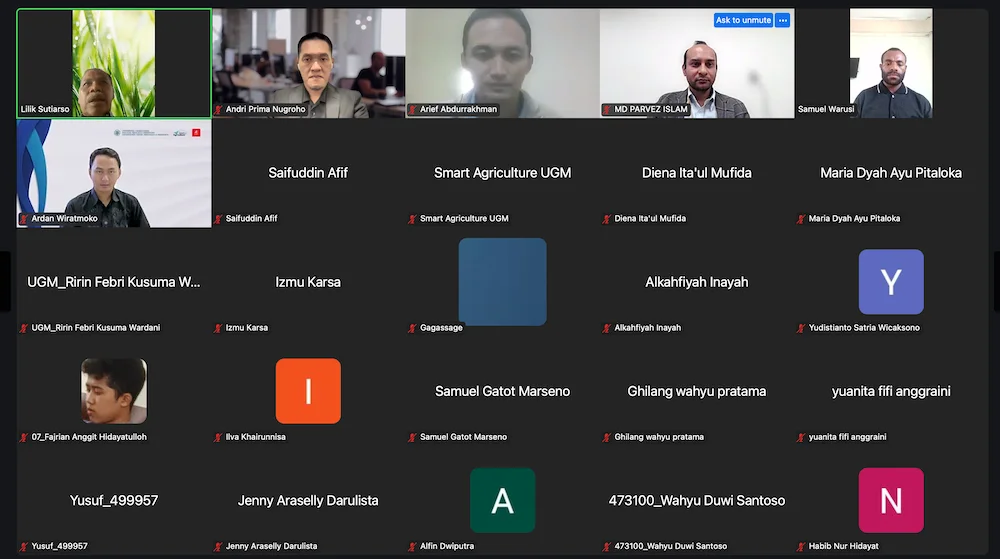
Online participants
Furthermore, the lecture discussed ethical considerations surrounding AI in agriculture, including data privacy and potential bias in AI algorithms. Assoc. Prof. Islam urged researchers and practitioners to prioritize ethical standards in the development and implementation of AI technology, ensuring that the technology serves the interests of all stakeholders in the agricultural sector.
The event concluded with a question-and-answer session, where participants asked questions about the practical applications of AI in their respective fields. The enthusiasm and engagement from the audience affirmed the growing interest in leveraging technology to enhance agricultural productivity and sustainability.
In conclusion, the guest lecture by Assoc. Prof. Parvez Islam provided a platform for knowledge exchange and collaboration among academics, researchers, and practitioners in the field of agriculture. It highlighted the potential of AI to transform tropical agriculture, paving the way for innovative solutions to pressing agricultural challenges.
As UGM continues to forge partnerships with international institutions such as Ehime University, the university aims to remain at the forefront of agricultural research and education, contributing to global efforts in achieving SDGs related to agriculture and food security.
Originally published on our previous site. Read the original