
Conference
UGM Experts Share AI Insights for Food and Energy Security at HATHI Webinar
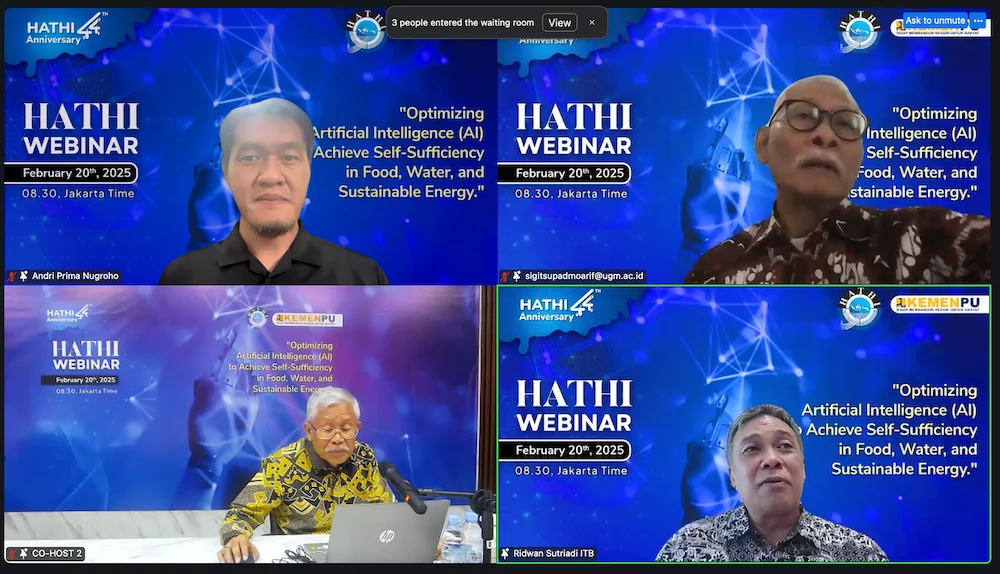
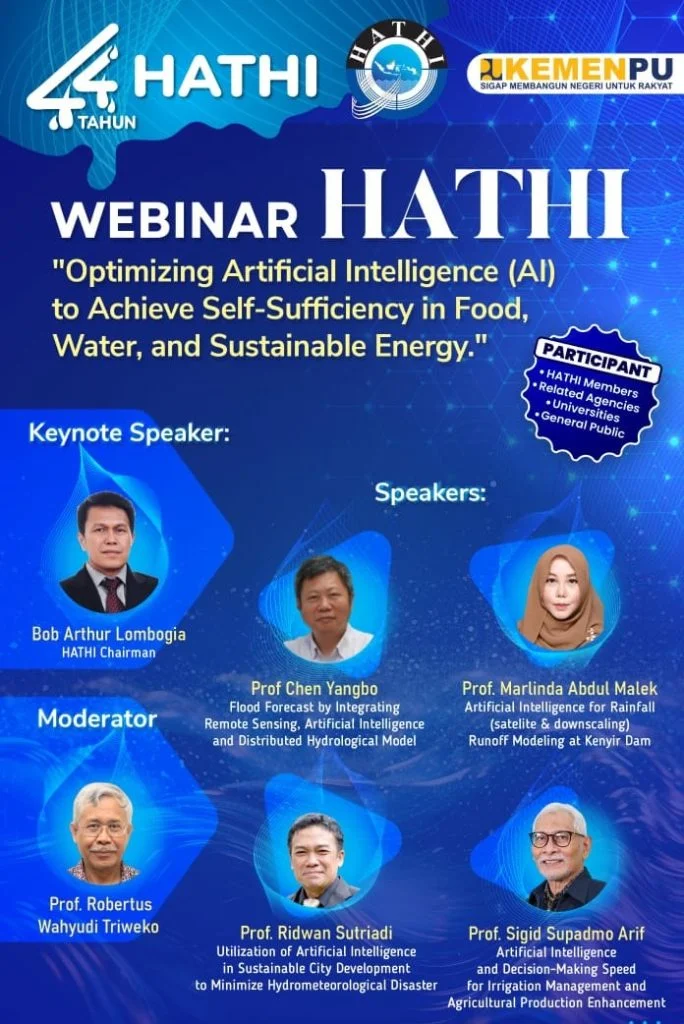
Yogyakarta, February 20, 2025 – Prof. Sigit Supadmo Arif and Dr. Andri Prima Nugroho, lecturers from the Department of Agricultural and Biosystems Engineering at Universitas Gadjah Mada (UGM), were keynote speakers at an international webinar organized by HATHI (Himpunan Ahli Teknik Hidraulik Indonesia). The webinar, themed "Optimization of AI in Water Resources Practice," brought together experts from Indonesia, Malaysia, and China to discuss the role of artificial intelligence (AI) in achieving food, water, and energy security.
At the event, Prof. Arif and Dr. Nugroho presented a paper titled "Artificial Intelligence and Rapid Decision-Making for Irrigation Management and Agricultural Production Improvement." Their presentation highlighted SIPASI 2.0, an intelligent irrigation management system developed by UGM. SIPASI 2.0 leverages AI to enhance water requirement prediction and irrigation scheduling, thereby improving efficiency and ease of use. The system is currently undergoing trials at various locations to optimize its performance and adaptive capabilities for wider dissemination.
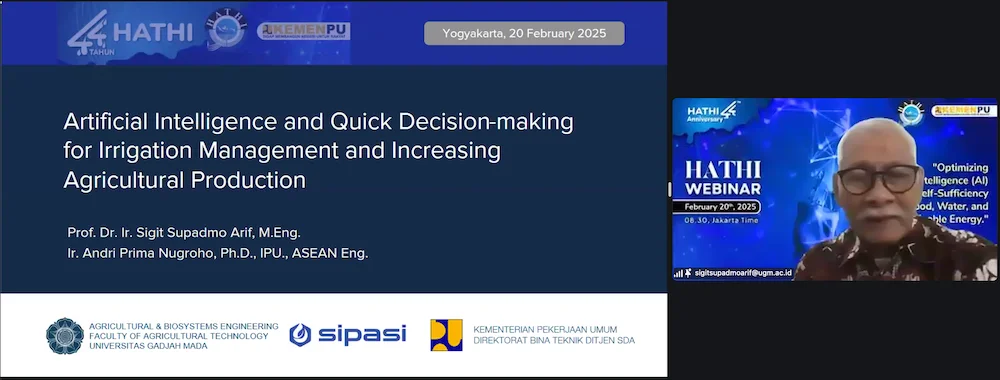
Material presentation by Prof. Sigit Supadmo Arif and Dr. Andri Prima Nugroho
A key feature of SIPASI 2.0 is the Knowledge Management Center, which provides users access to relevant information and an AI-based query system for quick and accurate answers. This innovation is crucial in addressing challenges posed by climate change, which significantly affects agricultural productivity and water resource management.
The webinar discussed important issues related to the water-food-energy nexus and sustainable development. Discussions explored the challenges and opportunities of implementing AI in water resource management, including data accessibility and the need for robust and adaptive solutions. The contributions of Prof. Arif and Dr. Nugroho demonstrate UGM's commitment to developing innovative technologies for improved agricultural practices and enhanced food security.
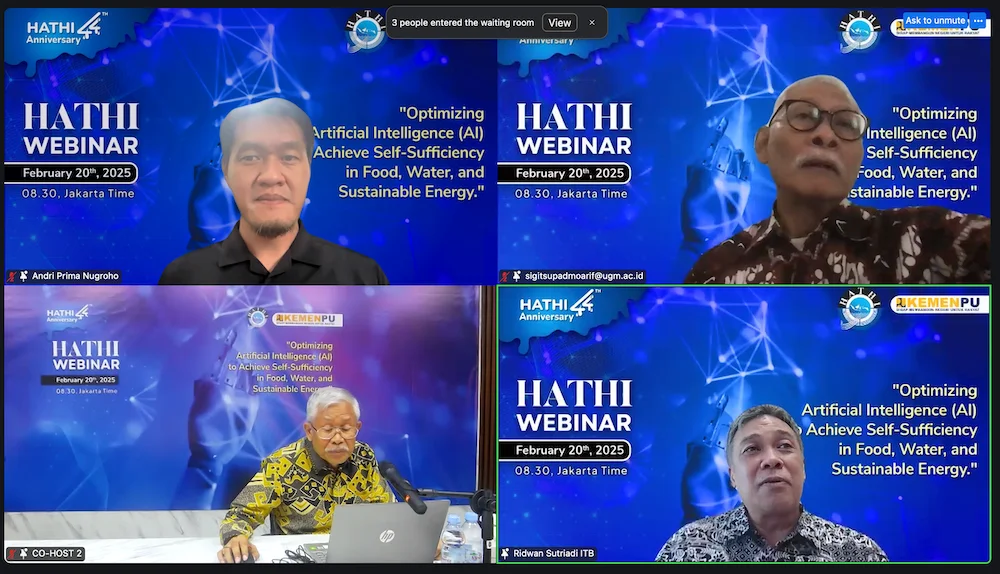
Discussion and Question-and-Answer Session
The event fostered knowledge exchange and collaboration among international experts, paving the way for future advances in AI-based water resource management. Participants engaged in lively discussions, sharing insights on how AI can be harnessed to combat the negative impacts of climate change on agriculture and food systems.
As the world grapples with the effects of climate change, the integration of AI in agricultural practices becomes increasingly important. The insights shared during the webinar highlighted AI's potential to transform traditional agricultural methods, making them more resilient and sustainable. By optimizing agricultural productivity through intelligent irrigation systems, farmers can better adapt to changing environmental conditions.
Furthermore, collaboration among experts from various countries underscores the importance of a collective approach in addressing global challenges. The exchange of ideas and experiences can generate innovative solutions that benefit not only individual nations but also the global community.
In conclusion, the HATHI webinar served as a platform to discuss the intersection of technology, agriculture, and sustainability. The insights provided by UGM experts are testament to the university's role in advancing research and development in the field of agricultural engineering. As we move forward, the integration of AI in agriculture will be key to ensuring food security and sustainable resource management amid climate change.
Originally published on our previous site. Read the original