
Uncategorized
<strong>Smart Greenhouse: Toward Food Security in the Era of Climate Change and Limited Land</strong>
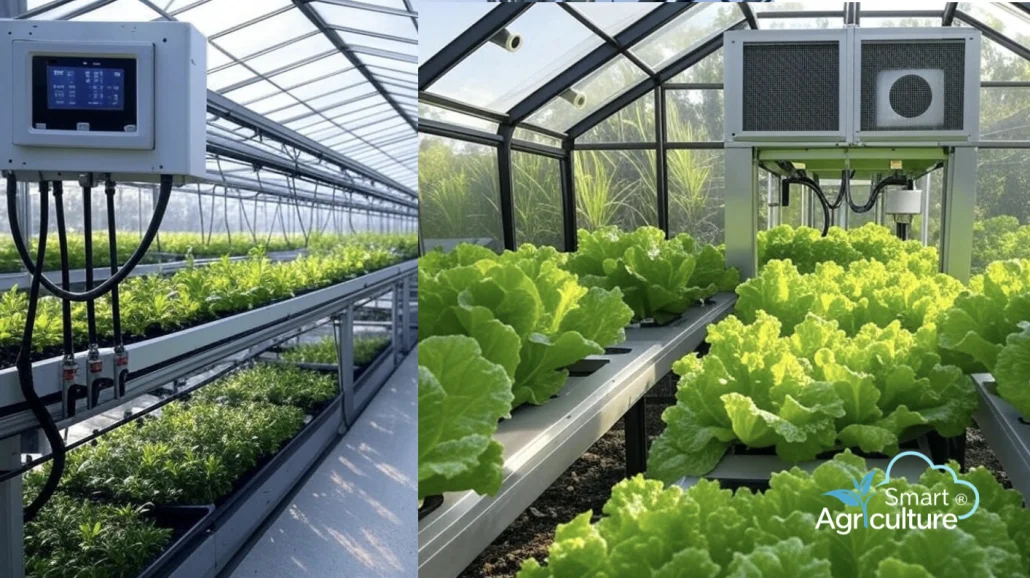
Climate change has had significant impacts on the global agricultural sector, including in Indonesia. The frequency and intensity of natural disasters such as droughts, floods, and heat waves are increasing, threatening agricultural productivity and food security. At the same time, the trend of declining agricultural land due to urbanization and land conversion is worsening the situation. Amid these challenges, Smart Greenhouse technology has emerged as an innovative solution to increase the efficiency and sustainability of agricultural production.
Smart Greenhouse: More Than Just a Greenhouse
Smart Greenhouse is not merely an ordinary greenhouse. It is an integrated agricultural system that utilizes advanced technology to create an optimally controlled plant growth environment. This system enables farmers to monitor and control various environmental factors that affect plant growth, including:
- Temperature and Humidity: Sensors and automatic control systems maintain optimal temperature and humidity for each type of plant.
- Light: Energy-efficient LED lighting systems that can be adjusted provide the correct light spectrum for each phase of plant growth.
- Irrigation: Precision irrigation systems ensure plants receive the correct amount of water, minimizing water waste and preventing excess water that can cause disease.
- Nutrition: A controlled nutrient delivery system provides the correct nutrients according to plant needs at each growth phase.
- Ventilation: An automatic ventilation system maintains good air circulation, preventing the accumulation of excessive heat and humidity.
- Pest and Disease Control: An integrated pest and disease monitoring and control system minimizes pesticide use.
- Monitoring and Data Analytics System: IoT sensors and data analytics systems collect and analyze real-time data to optimize growth conditions and predict harvest yields.
Key Technologies in Smart Greenhouse:
- Internet of Things (IoT): IoT sensors connected to the internet enable remote monitoring and control of environmental conditions inside the greenhouse.
- Artificial Intelligence (AI): AI is used to analyze data and automatically optimize plant growth conditions.
- Automation Systems: Automation systems control various aspects of the environment inside the greenhouse, minimizing manual intervention.
- Hydroponic/Aeroponic Systems: These soil-free cultivation methods increase the efficiency of water and land use.
The Connection Between Smart Greenhouse and Climate Change and Food Security:
Smart Greenhouse plays an important role in addressing climate change and increasing food security in the following ways:
- Reducing the impact of climate change: By controlling environmental conditions, Smart Greenhouse protects plants from the impacts of extreme weather.
- Increasing resource efficiency: More efficient use of water and fertilizer reduces environmental impacts.
- Increasing productivity: Higher and more consistent harvests contribute to food security.
- Enabling agricultural production in less fertile areas: Smart Greenhouse can be used in areas with environmental conditions that are less ideal for conventional agriculture.
Smart Greenhouse Research Challenges in Indonesia:
Despite the enormous potential of Smart Greenhouse, its development and implementation in Indonesia still faces several challenges:
- High investment costs: Smart Greenhouse technology is still relatively expensive, making it difficult for small-scale farmers to access.
- Limited infrastructure: Limited access to the internet and electricity in some areas is a constraint.
- Lack of expert personnel: Limited availability of experts in agricultural technology who are skilled in operating and maintaining Smart Greenhouse.
- Technology adaptation to local conditions: Smart Greenhouse technology needs to be adapted to suit local climate conditions and types of plants.
Conclusion:
Smart Greenhouse offers an innovative solution to increase food security and agricultural sustainability in Indonesia, especially amid climate change and declining agricultural land. Investment in research and development, expert personnel training, and government policy support are essential to realize the potential of Smart Greenhouse and ensure access to this technology for farmers throughout Indonesia.
#SmartGreenhouse #ClimateChange #FoodSecurity #Indonesia #Agriculture #Technology #Innovation #SustainableAgriculture
Originally published on our previous site. Read the original