
Collaboration Research
Smart Agriculture Research Center UGM Researchers Participate as Resource Speakers in FGD on AI Potential for Agriculture
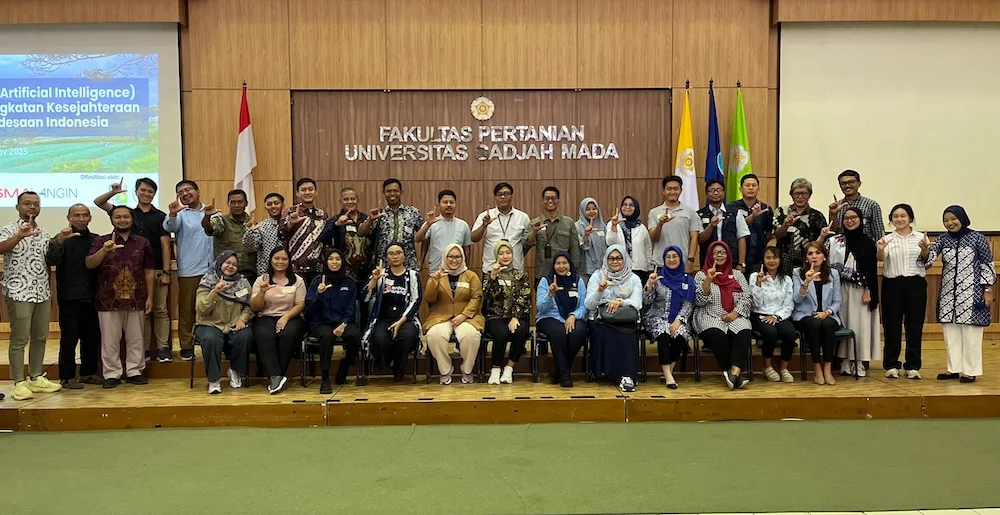
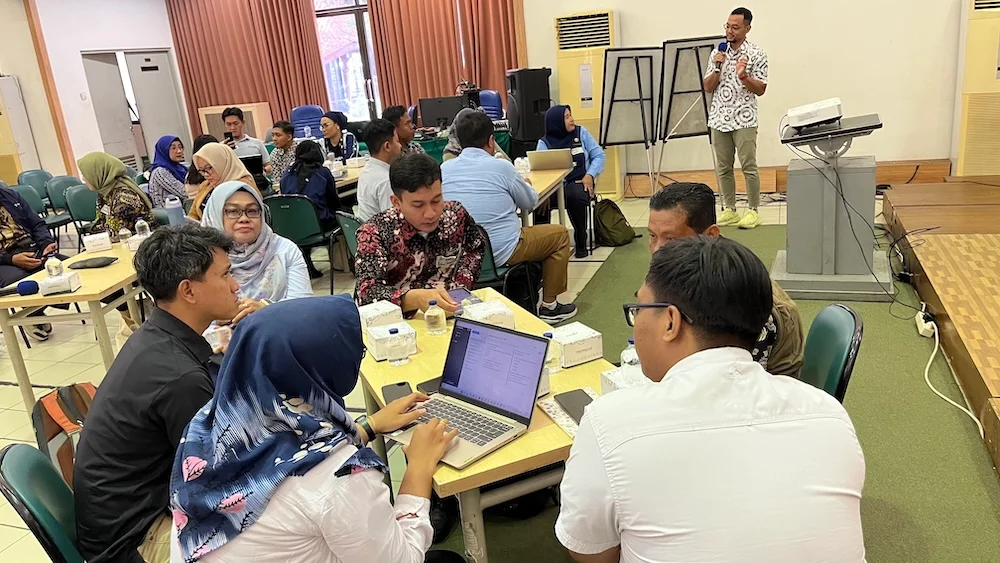
Yogyakarta, 18 November 2025 – Researchers from Smart Agriculture Research Center (SARC) UGM participated as resource speakers in a Focus Group Discussion (FGD) discussing opportunities and applications of Artificial Intelligence (AI) for agriculture and aquaculture sectors in rural areas. The event, organized by Desa Apps Faculty of Agriculture UGM in collaboration with The UK Global System for Mobile Communication Association (GSMA), Icenergy Institute, and Angel Investment Network Indonesia (ANGIN), took place on Tuesday, 18 November 2025, at the Auditorium of the Faculty of Agriculture UGM.
The team from Smart Agriculture Research Center, consisting of Dr. Andri Prima Nugroho, Diena Itaul Mufida, STP., and Ririn Febri Kusuma Wardani, STP., were invited to share their insights and expertise. Their presence strengthened discussions on the development of appropriate and sustainable agricultural technologies.
The FGD brought together various stakeholders, ranging from academics, agricultural technology startups such as JALA and FisTx, non-governmental organizations such as SATUNAMA and Dian Desa, to government representatives from the DIY Communication and Information Office and BRMP DIY.
The discussion focused on several crucial issues, including:
- Farmer Profile and Needs: Identifying challenges faced by farmers, where the majority seek certainty in harvest results and prices. AI technology is expected to be a solution to attract young people back to the agricultural sector.
- Technology Development Direction: It was agreed that the most needed technology is appropriate technology that provides direct impact on profitability, is easy to use, and is easy to repair. Automation was considered less of a priority due to concerns about its social impact on farm workers.
- AI Implementation Opportunities: Platforms already familiar to farmers, such as WhatsApp, have great potential to be integrated with AI as a technical support or knowledge management service. Quick question-and-answer features regarding commodity prices or plant diseases were also considered very attractive.
- Sustainable Business Models: Various business schemes were discussed, ranging from freemium models, technology rental (pay-per-use), to partnerships with intensive mentoring to ensure widespread and effective technology adoption.
The active participation of the SARC UGM team in this event affirms the institution's commitment to bridging innovative research with real needs in the field. It is hoped that the synergy built in this forum can be the initial step toward realizing more concrete and sustainable collaboration, so that innovative ideas can be translated into applicable AI solutions with positive impact on the welfare of small-scale farmers in Indonesia.
Contribution to the Sustainable Development Goals (SDGs)
This activity aligns with several sustainable development goals:
- SDG 1 (No Poverty): By improving agricultural efficiency and profitability through AI, it is expected to increase income and reduce poverty among small-scale farmers.
- SDG 2 (Zero Hunger): The utilization of AI technology can help increase agricultural productivity, which contributes to food security.
- SDG 5 (Gender Equality): The discussion highlighted the important role of female farmers in digital literacy and financial management, where AI can be a tool for their economic empowerment.
- SDG 8 (Decent Work and Economic Growth): Technological innovation in the agricultural sector can create new economic opportunities and make agriculture a more attractive sector for young workers.
- SDG 9 (Industry, Innovation, and Infrastructure): Promoting the application of innovation (AI) in vital industries such as agriculture for modernization and increased competitiveness.
- SDG 17 (Partnerships to Achieve the Goals): This event is a concrete example of multi-stakeholder collaboration among academia, private sector, government, and civil society to achieve common goals.
Originally published on our previous site. Read the original