
Conference
Agriculture 4.0 Innovation for Food Security: Dr. Andri Prima Nugroho UGM Shares Insights at UNS & Ministry of Agriculture National Workshop
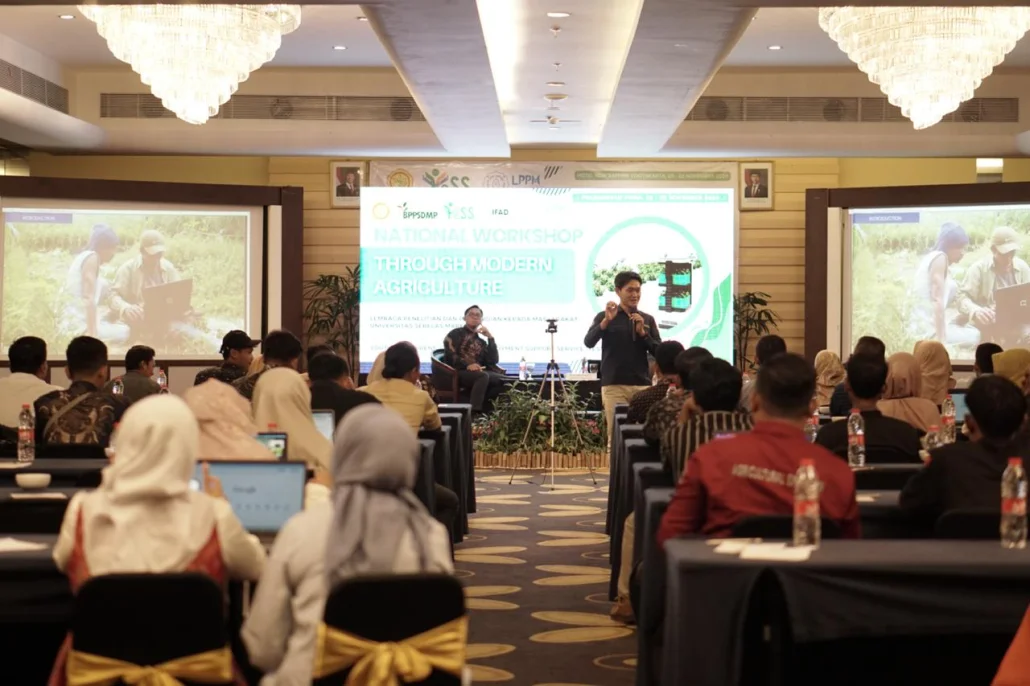
Yogyakarta, 26 November 2025 – The Research Institute and Community Service (LPPM) of Universitas Sebelas Maret (UNS) in collaboration with the Extension and Agricultural Human Resource Development Agency of the Ministry of Agriculture through the YESS Program, successfully held a National Workshop Through Modern Agriculture. The activity held at Hotel New Saphire Yogyakarta featured Ir. Andri Prima Nugroho, S.T.P., M.Sc., Ph.D., IPU., ASEAN Eng., APEC Eng., lecturer and researcher at the Department of Agricultural Engineering and Biosystems, Faculty of Agricultural Technology at Universitas Gadjah Mada (UGM), as the main speaker for the session on 26 November 2025.
This national workshop is a strategic initiative to accelerate the transformation of Indonesia's agricultural sector toward the digital era, with a focus on integrating Smart Farming innovations and Agriculture 4.0. Its objective is to increase production efficiency, optimize resource use, and strengthen sustainable and globally competitive national food security. This theme serves as the foundation for collaboration on technology innovation and knowledge to build a resilient and adaptive future for Indonesian agriculture.
In his presentation titled "Smart Farming and Agriculture 4.0 Innovation: Keys to Increasing Production Efficiency and National Food Security", Dr. Andri Prima Nugroho comprehensively discussed the concepts, potential, and implementation of advanced technologies such as Internet of Things (IoT), Artificial Intelligence (AI), Big Data Analytics, Automation, and Robotics in the context of modern agriculture. He emphasized how these technologies can be a solution to current national agricultural challenges, including land limitations, the impacts of climate change, and the urgent need to increase productivity. Workshop participants, from various backgrounds, gained in-depth understanding of the main pillars of Agriculture 4.0 and its impact on resource efficiency, productivity improvement, and reduction of post-harvest losses.
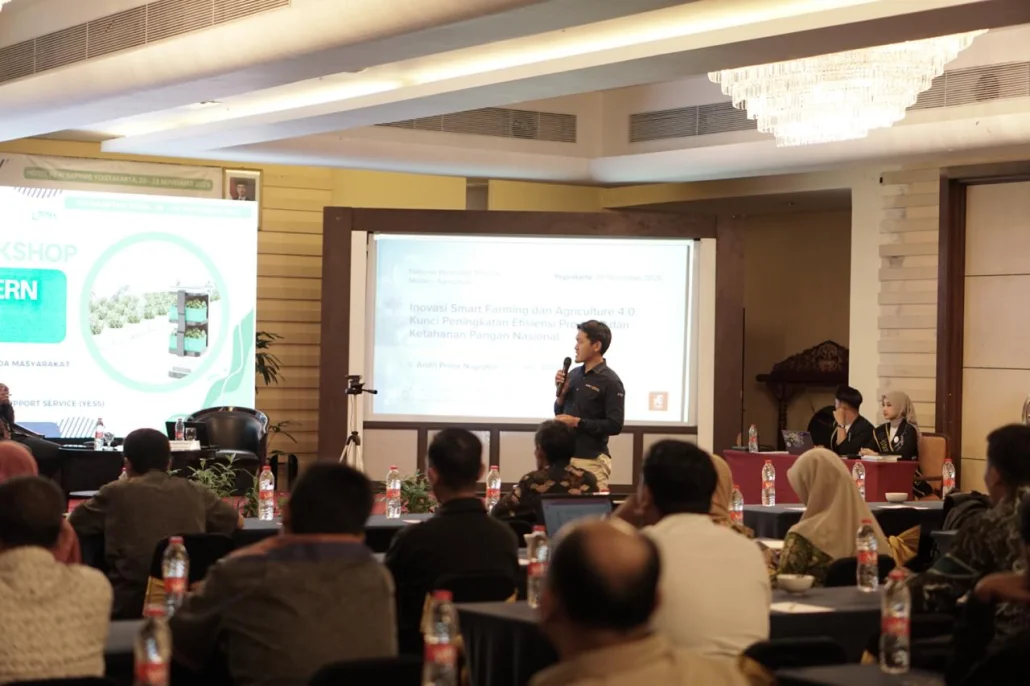
The session also highlighted case studies of innovation implementation in Indonesia, including UGM's Smart Agriculture project, as well as government and private sector initiatives in agricultural digitalization. Dr. Andri also discussed major challenges in innovation adoption, such as digital infrastructure gaps and farmers' technical literacy, as well as strategies to overcome them through infrastructure investment, financing schemes, and comprehensive training programs. The discussion and question-and-answer session was highly interactive, demonstrating participants' enthusiasm for the topic.
Support for Sustainable Development Goals (SDGs)
The "National Workshop Through Modern Agriculture" activity directly contributes to several United Nations Sustainable Development Goals (SDGs):
– SDG 2: Zero Hunger: By promoting Smart Farming and Agriculture 4.0 to improve production efficiency, this workshop supports efforts to achieve national food security and reduce hunger.
– SDG 4: Quality Education: Through the transfer of knowledge about cutting-edge agricultural technology, this activity enhances participants' competence in agricultural digitalization, equipping them with relevant skills for the future.
– SDG 9: Industry, Innovation, and Infrastructure: The focus on integrating advanced technology and innovation in agriculture aligns with the goal of building robust infrastructure, promoting inclusive and sustainable industrialization, and fostering innovation.
– SDG 17: Partnerships for the Goals: Collaboration among Universitas Gadjah Mada, Universitas Sebelas Maret, the Ministry of Agriculture, and the YESS Program demonstrates the importance of multi-stakeholder partnerships in achieving sustainable development goals.
Through this workshop, it is hoped that participants can become agents of change inspired to adopt and develop Agriculture 4.0 innovations, thereby enabling Indonesian agriculture to become more modern, efficient, sustainable, and globally competitive for the sake of robust national food security.
Originally published on our previous site. Read the original