
Collaboration Research
Plant Physiology Testing Using LI-COR 6800 in Gunungkidul Drives Sustainable Agroforestry Development
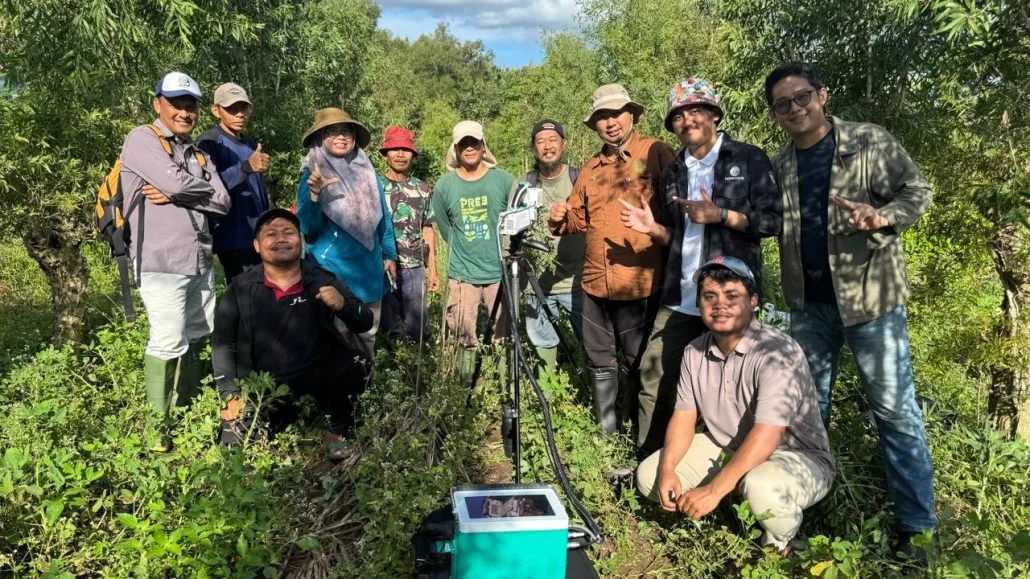
Gunungkidul, May 1, 2026 – Plant physiology testing activities using the LI-COR 6800 Portable Photosynthesis System were conducted over three consecutive days from April 29 to May 1, 2026 in the KTH Watu Lawang area, Gunungkidul, Special Region of Yogyakarta. This activity is part of collaborative research with researchers from BRIN's Biological Research and Environmental Organization in supporting the development of data-driven agroforestry systems and environmental sustainability.
Testing was conducted on several plant commodities, namely jackfruit, legumes, eucalyptus, and corn, to determine the physiological condition and health of plants directly in the field. Data collection was performed using modern photosynthesis measurement technology capable of recording important plant parameters such as photosynthetic rate, stomatal conductance, and plant water use efficiency in real-time.
In this activity, the equipment operation technical team consisted of Samuel Gatot Marseno, S.T.P., Fathuzaky Setyawan, S.T.P., and Fadel Arya Perdana S.Si. who were responsible for equipment preparation, sensor calibration, field data collection, and ensuring research data quality remained optimal throughout the activity.
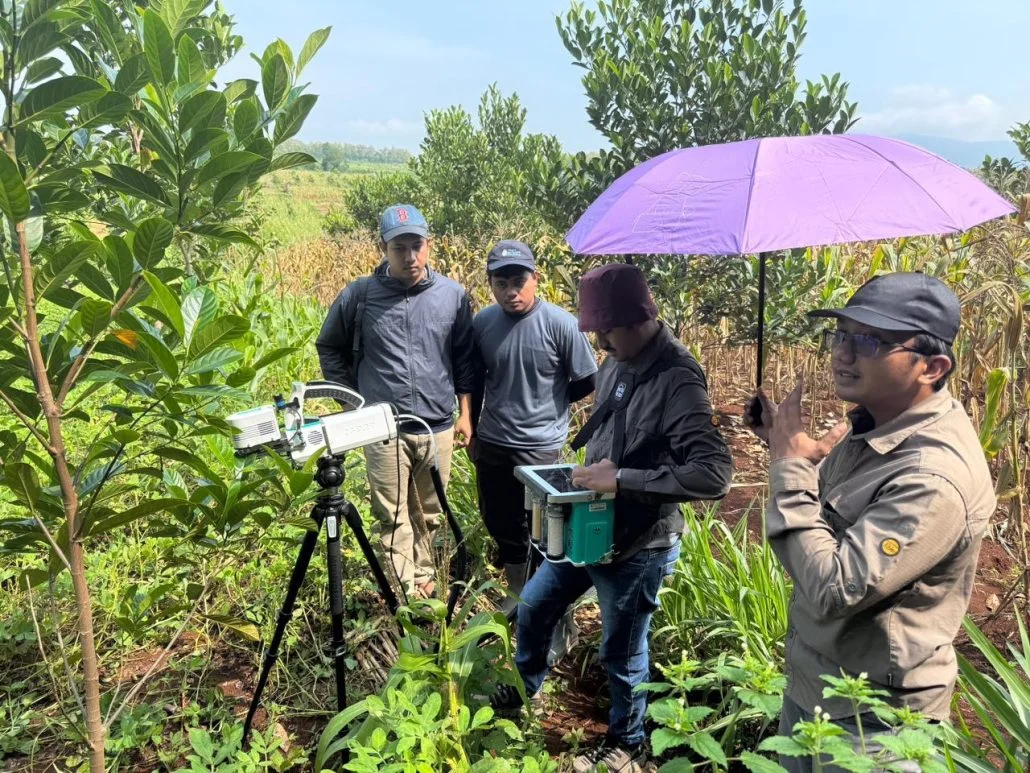
The use of plant physiology measurement technology such as LI-COR 6800 has become an important part in supporting the development of precision agriculture and sustainable agroforestry. This approach aligns with the development of smart agricultural research that is continuously being promoted by various research institutions and universities to improve efficiency in data-driven plant management.
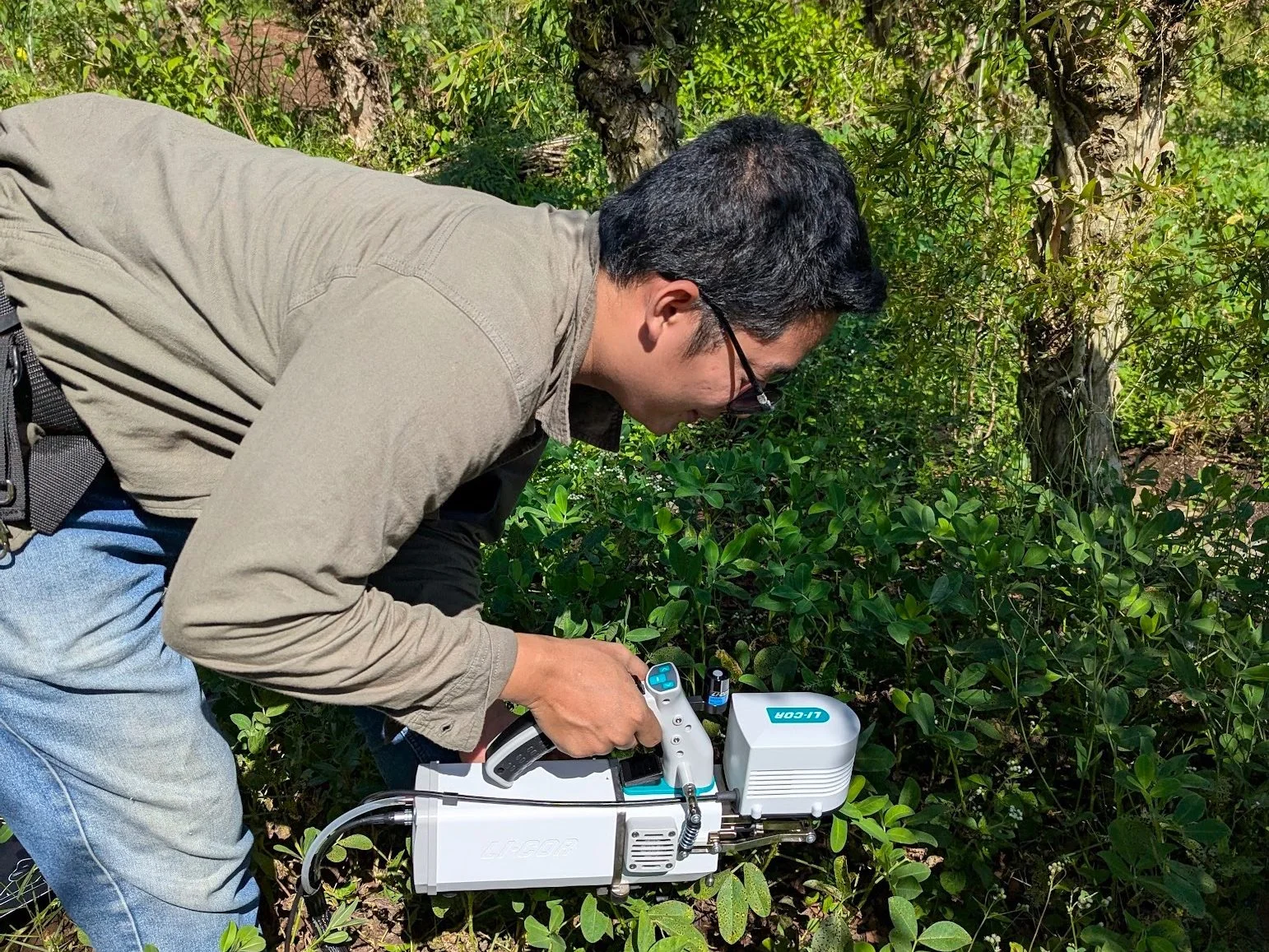
Beyond focusing on the scientific aspect, this research is also directed at supporting the development of agroforestry areas that have ecological and economic value for the surrounding community. Through monitoring plant health conditions, the research results are expected to serve as a basis for creating agroforestry areas that are more attractive, productive, and adaptive to environmental changes. Development of healthy and well-managed agroforestry landscapes also has the potential to increase nature-based tourism appeal in the community forest area of Gunungkidul.
SDG 2: Zero Hunger, through strengthening sustainable agriculture systems and plant productivity;
SDG 9: Industry, Innovation and Infrastructure, through the application of modern technology in agricultural research;
SDG 13: Climate Action, through agroforestry management that is adaptive to climate change;
SDG 15: Life on Land, through efforts to maintain vegetation health and sustainability of terrestrial ecosystems;
SDG 17: Partnerships for the Goals, through research collaboration between universities, research institutions, and communities
Originally published on our previous site. Read the original