
Collaboration Research
Smart Agriculture Lecturers and Researchers from DTPB FTP UGM Participate in PAIR Sulawesi Annual Meeting 2026 to Strengthen Smart Seaweed Innovation
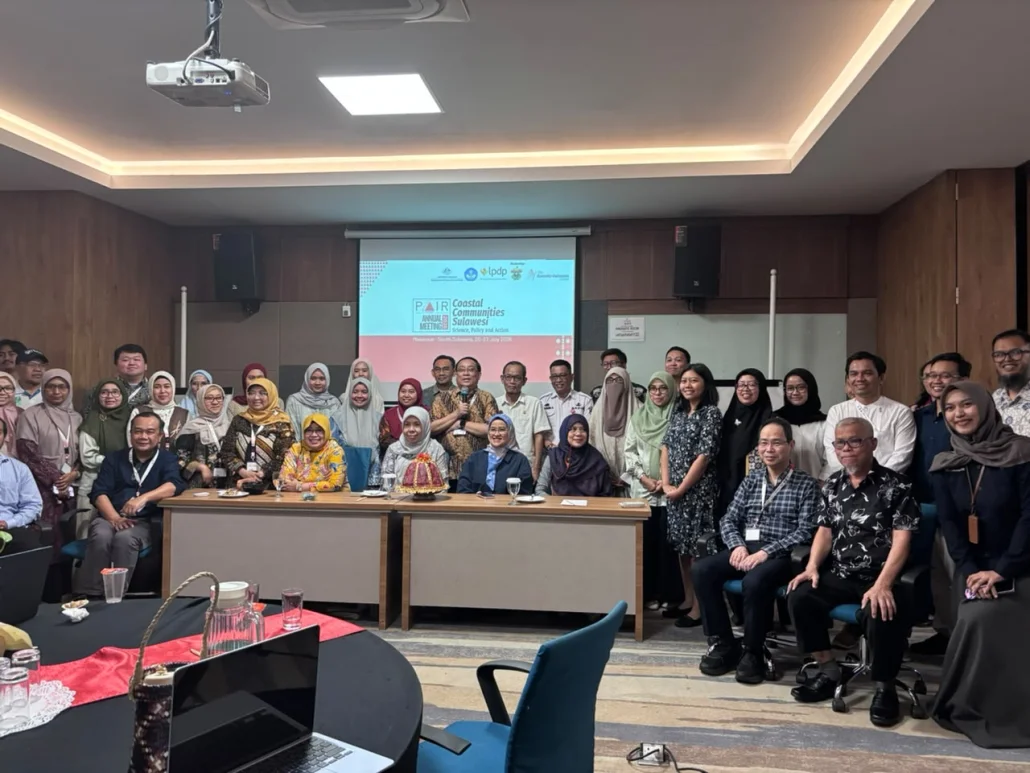
Makassar, July 23, 2026 – Lecturers and researchers from the Department of Agricultural and Biosystems Engineering (DTPB), Faculty of Agricultural Technology, Universitas Gadjah Mada (FTP UGM), participated in the Partnership for Australia-Indonesia Research (PAIR) Sulawesi Annual Meeting 2026, held on July 20–23, 2026 at UNHAS Hotel & Convention, Universitas Hasanuddin, Makassar.
The UGM delegation at the event consisted of Prof. Dr. Ir. Lilik Sutiarso, M.Eng., Andri Prima Nugroho, Ph.D., and Samuel Gatot Marseno, S.TP. The presence of the UGM team is part of DTPB FTP UGM's involvement in research focusing on technology, particularly Sea-Tech: Sustainable Seaweed Cultivation through Smart Technology and Automation.
PAIR Sulawesi is a bilateral research program funded by the Australian Government through the Department of Foreign Affairs and Trade (DFAT) and the Indonesian Government through the Ministry of Higher Education, Science, and Technology and the Education Fund Management Agency (LPDP). The program is managed by the Australia-Indonesia Centre (AIC) at Monash University in collaboration with Universitas Hasanuddin.
Currently, PAIR Sulawesi involves 19 universities and 180 researchers working across six provinces in Sulawesi. The program focuses on three main themes: circular economy in the seaweed sector, transition toward net zero health facilities, and climate change and health.
With the theme "Coastal Communities Sulawesi: Science, Policy and Action," the PAIR Sulawesi Annual Meeting 2026 serves as a forum for researchers, government officials, development partners, and stakeholders to present first-year research findings, discuss various challenges faced, and establish research and implementation priorities for the second year.
For the DTPB FTP UGM team, this forum represents an important opportunity to strengthen the contribution of agricultural and biosystems engineering in developing technology-based seaweed cultivation. This approach encompasses field data collection and integration, monitoring technology, automation, and the development of dashboards and decision support systems for government and stakeholders.
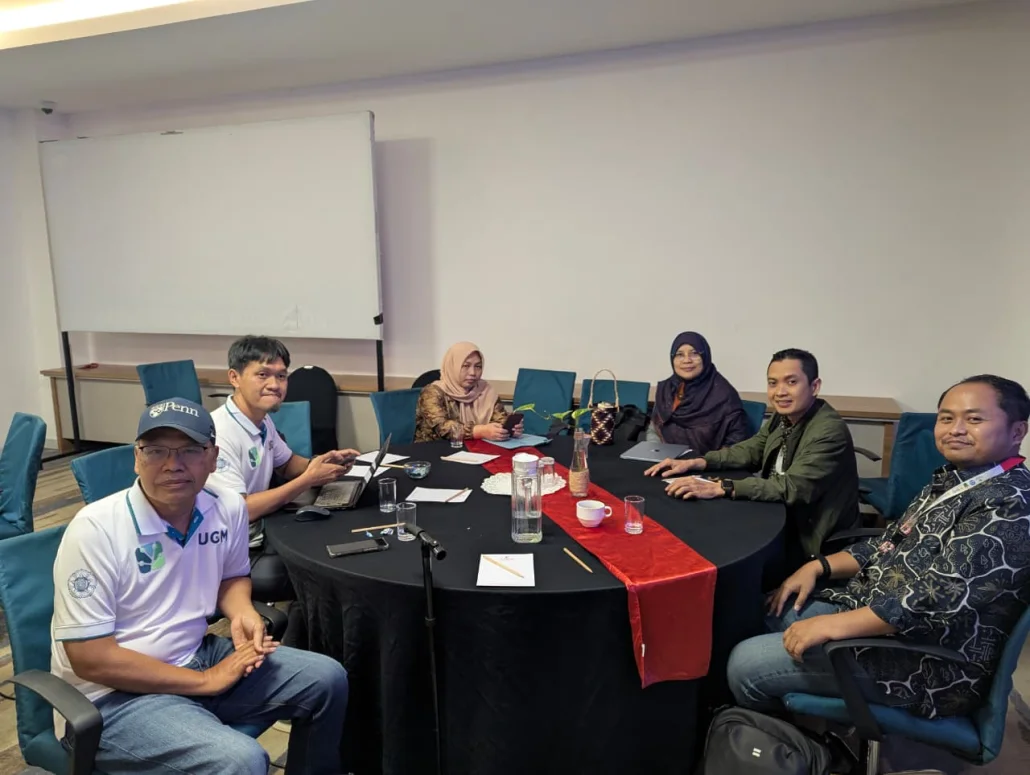
Andri Prima Nugroho stated that participation in this annual meeting not only provides a space to present research developments but also to evaluate the appropriateness of technology to the needs of coastal communities.
"The technology developed must be grounded in the real conditions faced by seaweed farmers. This meeting provides a space for researchers and stakeholders to unite data, field experience, and policy needs so that the innovations produced can truly be applied and provide benefits," Andri explained.
The involvement of the DTPB FTP UGM team at the PAIR Sulawesi Annual Meeting 2026 also continues from field survey activities previously conducted in Punaga Village, Takalar District, South Sulawesi, on January 25–27, 2026. During these activities, the team collected data on seaweed market prices, production conditions, supply chain dynamics, and institutional aspects at the regional level.
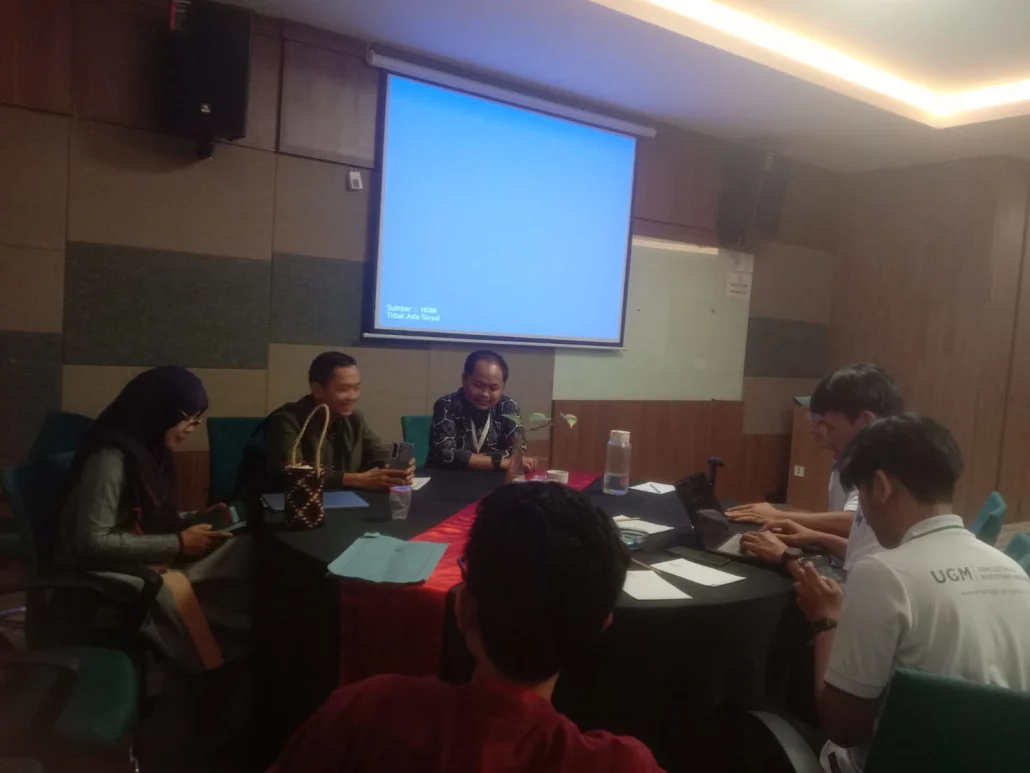
This data serves as one foundation for developing the Government User Interface Dashboard, a system designed to help regional governments monitor the condition of the seaweed sector and support more measurable, transparent, and evidence-based policy-making. The previous survey activities can be read in the DTPB FTP UGM news report.
Through this annual forum, results and learning from field activities can be discussed with research teams across disciplines and institutions. This collaboration is important because seaweed sector development requires not only cultivation innovation but also integration of technology, remote sensing, information systems, governance, circular economy, and policy support.
Prof. Lilik Sutiarso emphasized that agricultural and biosystems engineering approaches can play a role in connecting field data with management and decision-making needs.
"The challenge is not merely producing technology or displaying data, but building a system that can be used to read field conditions, identify risks, and support decision-making. Therefore, collaboration between researchers, government, and communities becomes a very important part," Prof. Lilik stated.
The PAIR Sulawesi Annual Meeting 2026 program includes opening and high-level plenary sessions, policy forums on circular economy, net zero, and climate change and health themes, discussions among research teams, and a closing ceremony attended by the Australian Ambassador to Indonesia. The event also serves to strengthen research networks between higher education institutions in Indonesia and Australia.
The participation of DTPB FTP UGM in the PAIR program is expected to strengthen the implementation of research results toward operational solutions suited to user needs. The development of smart seaweed technology is aimed not only at improving the effectiveness of monitoring and cultivation management but also at supporting farmer welfare, coastal environmental sustainability, and strengthening regional economy.
This activity contributes to the achievement of several Sustainable Development Goals (SDGs), particularly:
- SDG 1 – No Poverty, through strengthening farmers' access to production and market information that can support welfare improvement.
- SDG 8 – Decent Work and Economic Growth, through enhancing productivity, value chain efficiency, and economic growth of coastal communities.
- SDG 9 – Industry, Innovation, and Infrastructure, through the development of monitoring technology, automation, dashboards, and decision support systems.
- SDG 12 – Responsible Consumption and Production, through the application of circular economy principles and more efficient resource management.
- SDG 13 – Climate Action, through the utilization of environmental data to enhance the adaptive capacity of seaweed cultivation.
- SDG 14 – Life Below Water, through support for productive and sustainable seaweed cultivation practices.
- SDG 17 – Partnerships for the Goals, through collaboration among higher education institutions, government, international partners, and communities.
Through participation in the PAIR Sulawesi Annual Meeting 2026, DTPB FTP UGM reaffirms its commitment to developing agricultural and biosystems technology that goes beyond academic output and can be translated into innovation, policy, and concrete action for sustainable development in Indonesia's coastal regions.
Originally published on our previous site. Read the original