
Achievement
10 Smart Agriculture Research Center Students Graduate, One Achieves Highest GPA in TPB Department at UGM
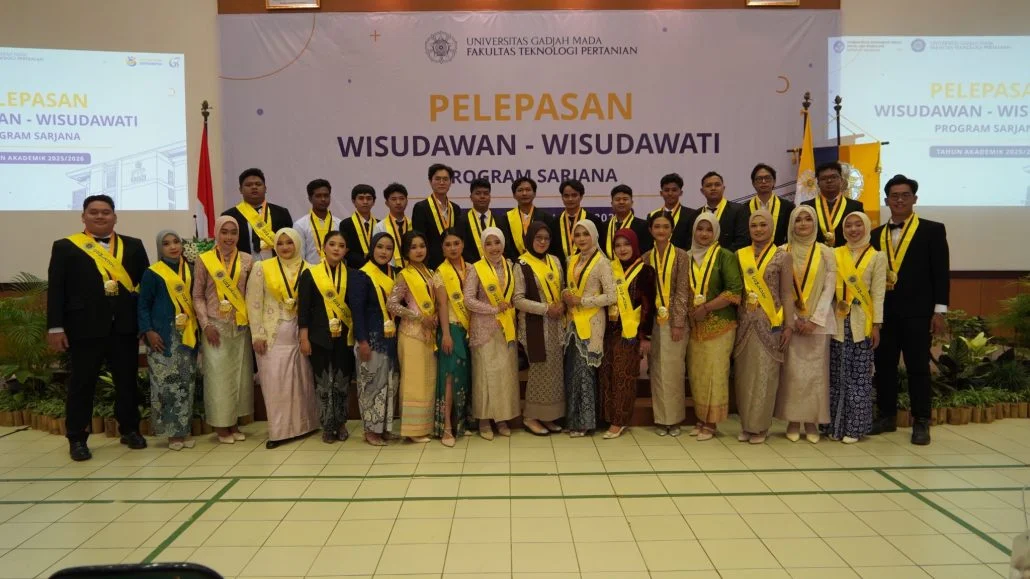
Smart Agriculture Research Center has graduated 10 students who have completed their studies and earned their Bachelor of Agricultural Technology (S.T.P.) degree, with one graduate achieving the highest GPA in the Department of Agricultural Engineering and Biosystems (TPB) at UGM and ranking in the top 10 highest GPAs at the Faculty of Agricultural Technology UGM. These ten students completed final research projects on various topics, such as irrigation efficiency, artificial intelligence, and nondestructive monitoring of plant conditions and agricultural machinery. The diversity of research topics reflects the Smart Agriculture Research Center's commitment to promoting the development of smart agricultural technology that leverages data and sensors. Below is a summary of the research and achievements of each graduate.
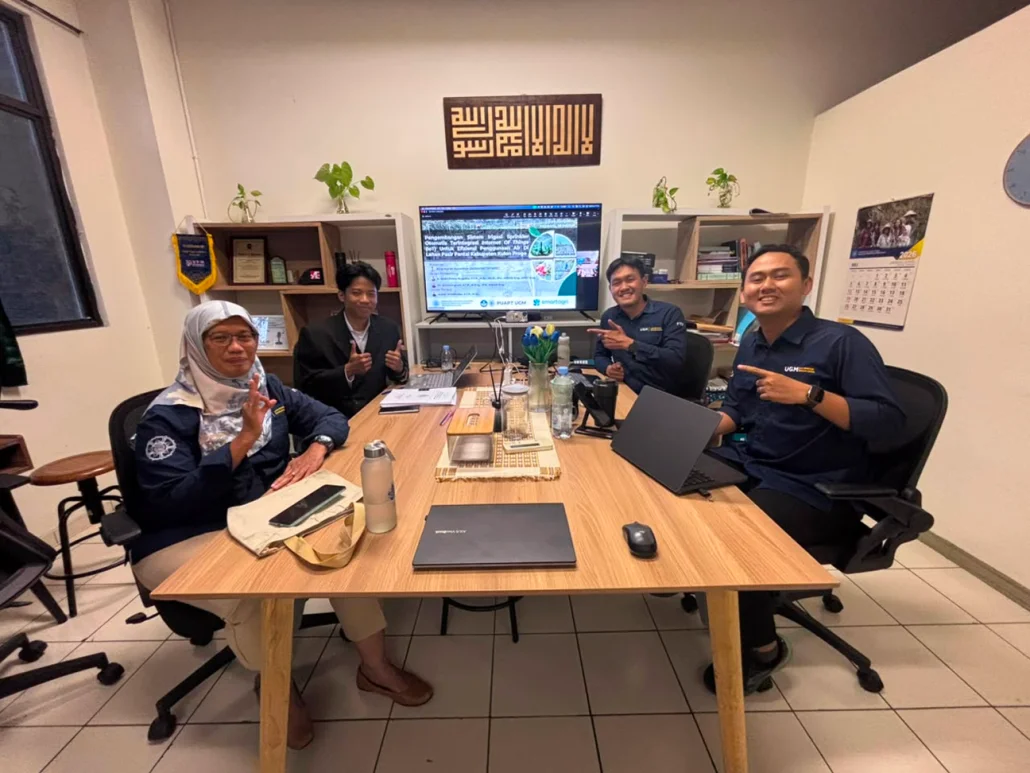
Rizqi Asy'ari R., S.T.P. completed research titled "Development of an Automatic Sprinkler Irrigation System Based on Hysteresis Method for Water Use Efficiency on Sandy Coastal Land". This research developed an automatic control system capable of regulating irrigation more precisely, making water use on sandy coastal land more efficient. Rizqi was supervised by Ir. Andri Prima Nugroho, M.Sc., Ph.D. as the First Supervisor and Dr. Murtiningrum, S.T.P., M.Eng. as the Second Supervisor, with Ardan Wiratmoko, S.T.P., M.Sc. serving as examiner.
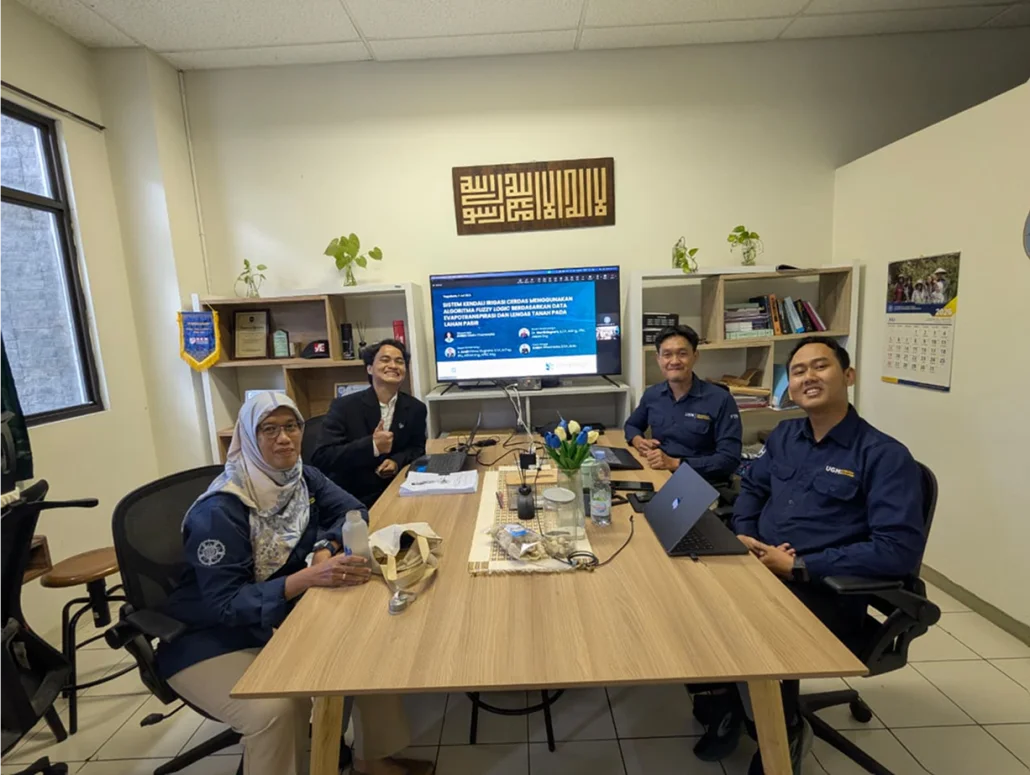
Ardan Desta Vaunendra, S.T.P. conducted research titled "Design of a Sprinkler Irrigation Control System Based on Fuzzy Logic Algorithm Using Plant Evapotranspiration Data and Soil Moisture on Sandy Coastal Land". The developed system utilizes fuzzy logic to integrate evapotranspiration and soil moisture data so that irrigation operates more adaptively to field conditions. This research was supervised by Ir. Andri Prima Nugroho, M.Sc., Ph.D. and Dr. Murtiningrum, S.T.P., M.Eng., and examined by Ardan Wiratmoko, S.T.P., M.Sc.
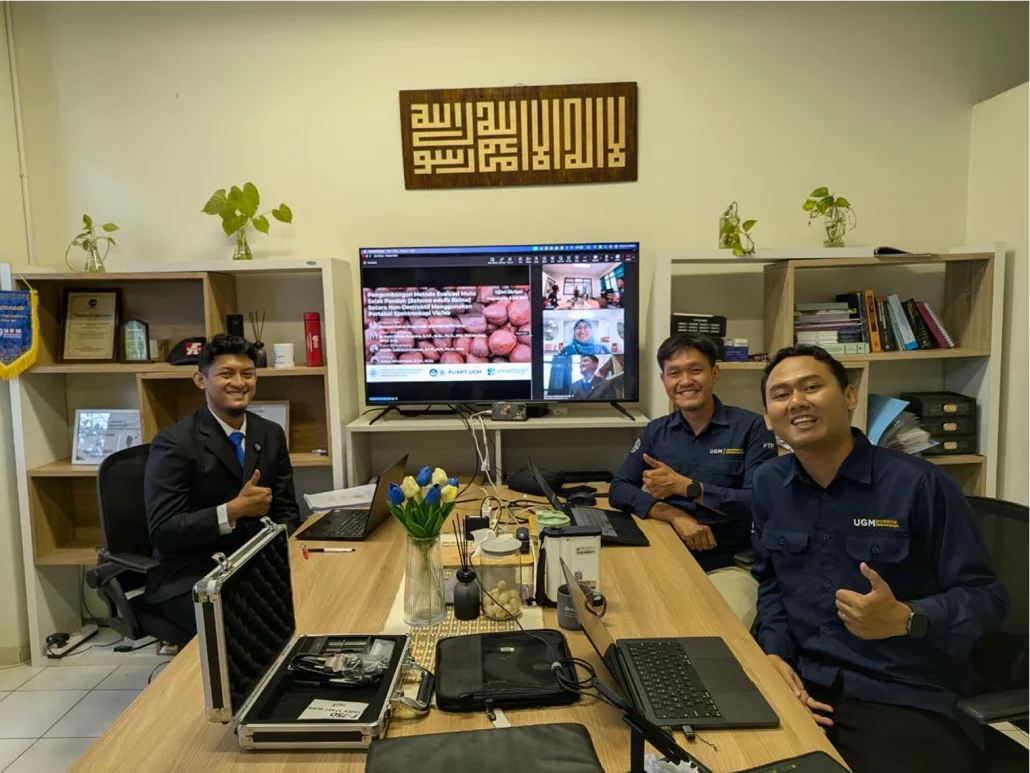
Shidqon Fathul M., S.T.P. completed research titled "Development of a Prediction Model for Total Dissolved Solids and Classification of Pondoh Snake Fruit (Salacca zalacca) Maturity Level Nondestructively Based on Machine Learning Using Portable Visible Near Infrared Spectroscopy". This research produced a machine learning model capable of predicting the quality and maturity of pondoh snake fruit without damaging the sample, utilizing portable spectroscopy technology. Shidqon was supervised by Ir. Andri Prima Nugroho, M.Sc., Ph.D. and Hanim Zuhrotul Amanah, S.T.P., M.P., Ph.D., with Ardan Wiratmoko, S.T.P., M.Sc. serving as examiner.
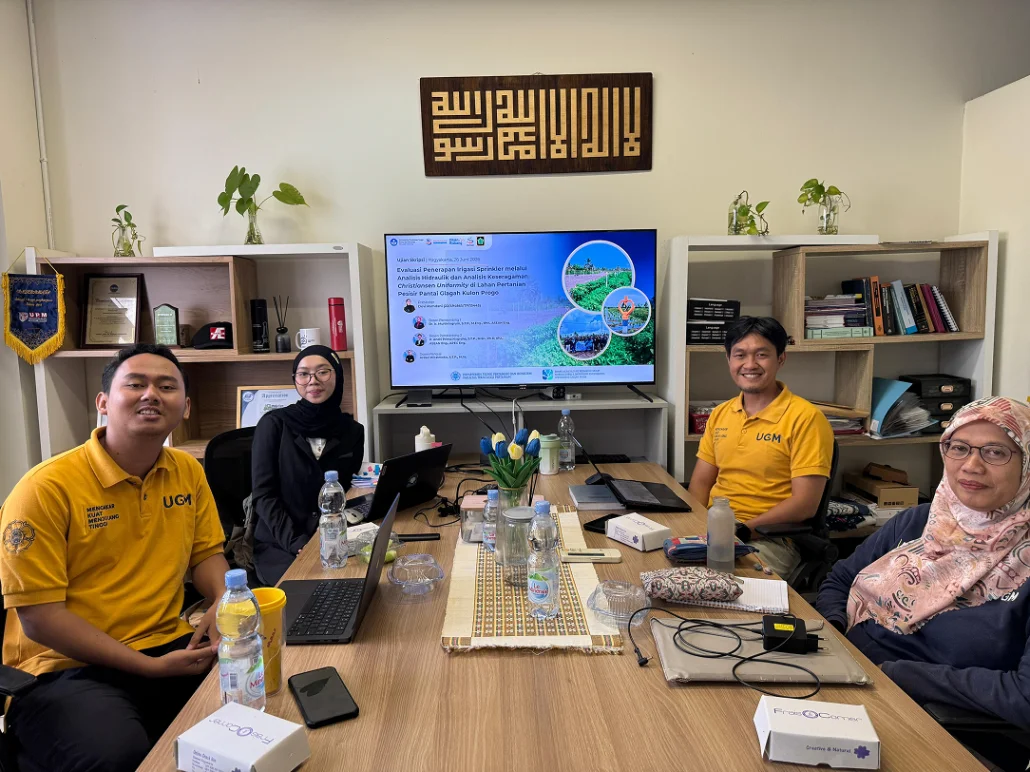
Devi Ramdani, S.T.P. is one of the top graduates, achieving the highest GPA in the Department of Agricultural Engineering and Biosystems (TPB) at UGM and ranking in the top 10 highest GPAs at the Faculty of Agricultural Technology UGM. In addition to this academic achievement, Devi completed research titled "Evaluation of Sprinkler Irrigation Implementation Based on Hydraulic Analysis and Uniformity on Agricultural Land at Glagah Coastal Area, Kulon Progo". This research evaluated the performance of an implemented sprinkler irrigation system through hydraulic analysis to ensure even water distribution on coastal farmland. Devi was supervised by Dr. Murtiningrum, S.T.P., M.Eng. as the First Supervisor and Ir. Andri Prima Nugroho, M.Sc., Ph.D. as the Second Supervisor, with Ardan Wiratmoko, S.T.P., M.Sc. serving as examiner.
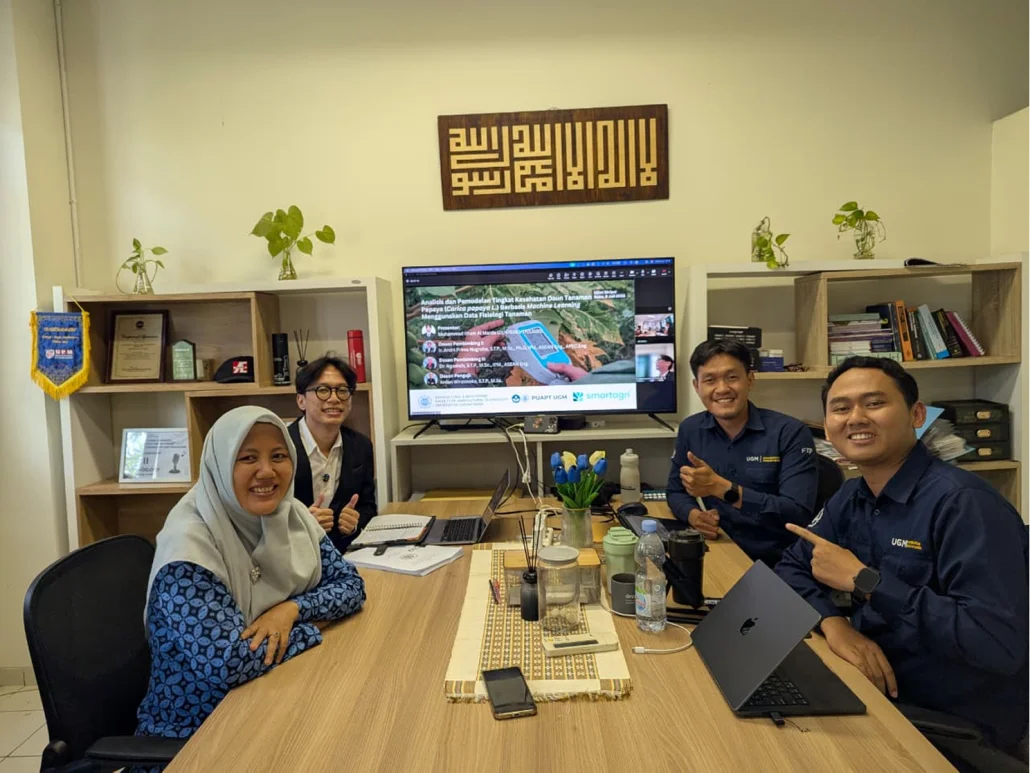
Muhammad Ilham A., S.T.P. conducted research titled "Analysis and Modeling of Papaya Leaf Health Status (Carica papaya L.) Based on Machine Learning Using Plant Physiological Data". This research built a predictive model to assess the health status of papaya leaves based on plant physiological data, thereby supporting early detection of growth disturbances. Muhammad Ilham was supervised by Ir. Andri Prima Nugroho, M.Sc., Ph.D. and Dr. Ngadisih, S.T.P., M.Sc., with Ardan Wiratmoko, S.T.P., M.Sc. serving as examiner.
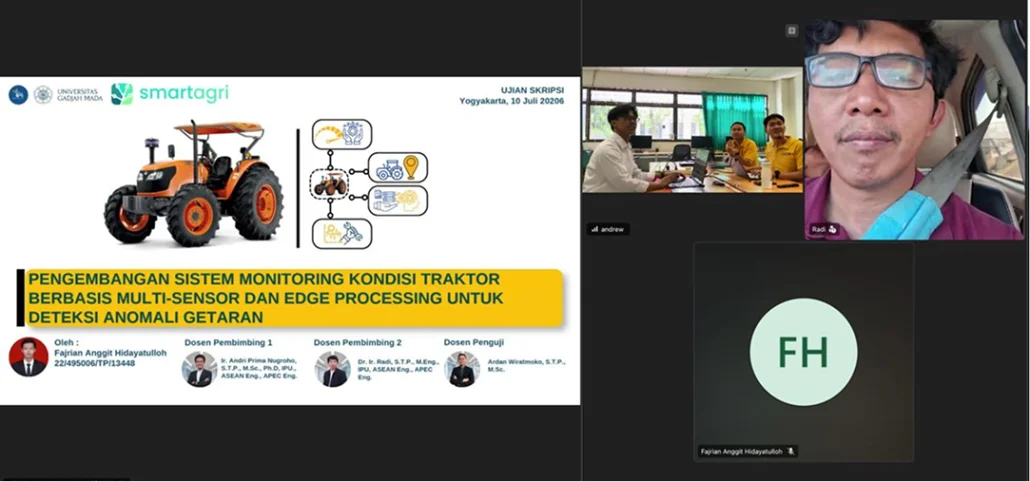
Fajrian Anggit H., S.T.P. completed research titled "Development of a Multisensor-Based Tractor Condition Monitoring System and Edge Processing for Vibration Anomaly Detection". The developed system utilizes various sensors and edge processing to detect vibration anomalies on tractors in real-time, so that potential damage can be identified earlier. Fajrian was supervised by Ir. Andri Prima Nugroho, M.Sc., Ph.D. and Dr. Radi, S.T.P., M.Eng., with Ardan Wiratmoko, S.T.P., M.Sc. serving as examiner.
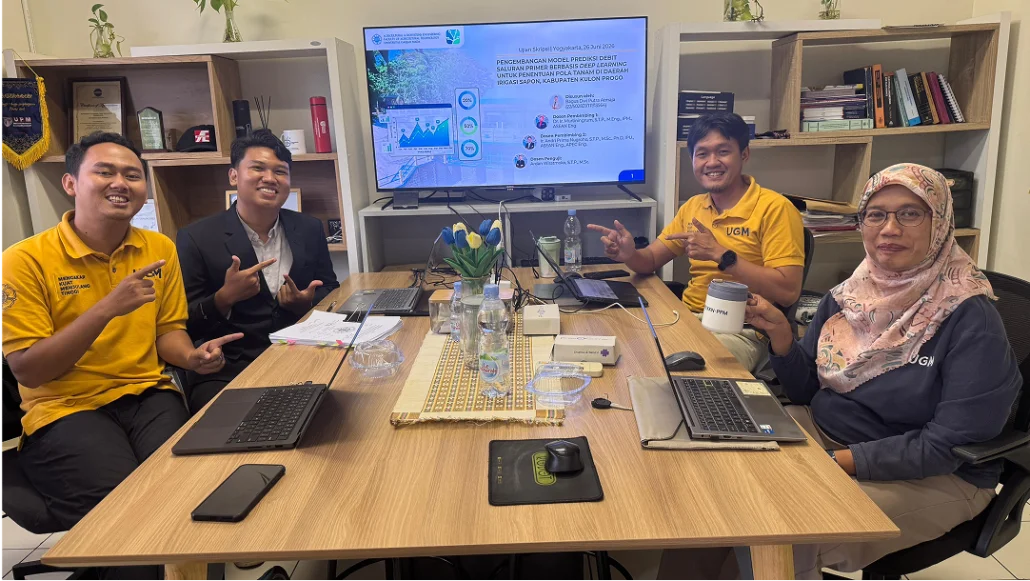
Bagus Putra Dwi A., S.T.P. conducted research titled "Development of a Deep Learning-Based Primary Channel Discharge Prediction Model to Support Cropping Pattern Determination in Sapon Irrigation Area, Kulon Progo Regency". The deep learning model developed aims to predict water discharge in the primary channel so that it can serve as a basis for decision-making in determining more appropriate cropping patterns. Bagus was supervised by Dr. Murtiningrum, S.T.P., M.Eng. and Ir. Andri Prima Nugroho, M.Sc., Ph.D., with Ardan Wiratmoko, S.T.P., M.Sc. serving as examiner.
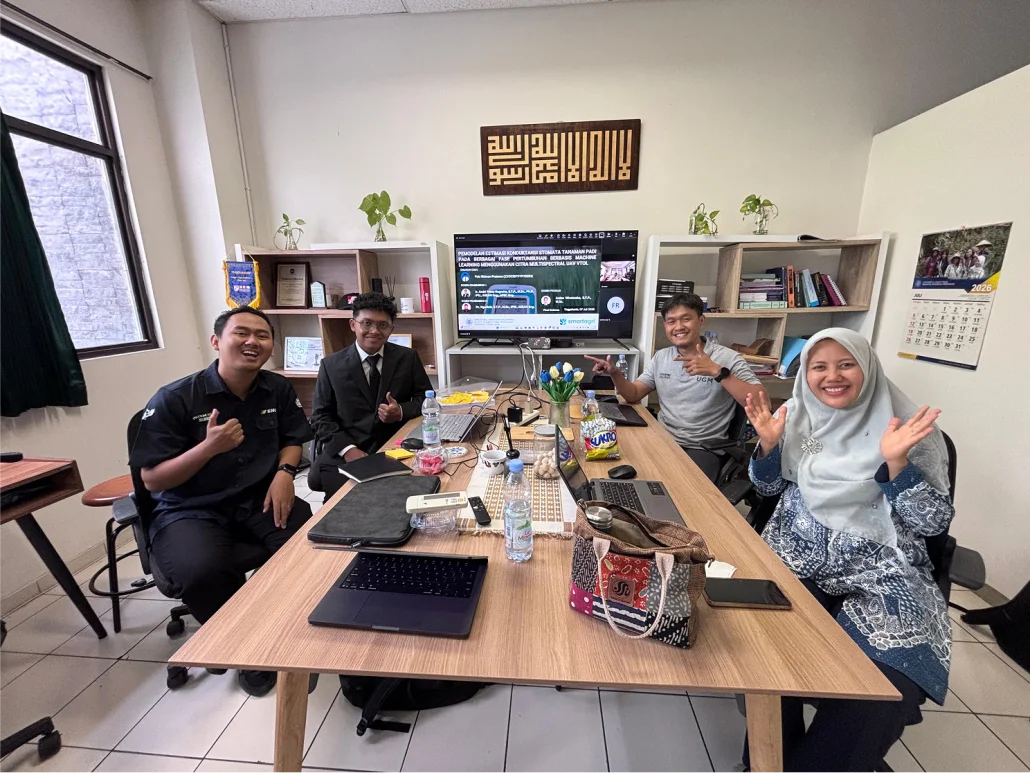
Faiz Ridwan P., S.T.P. completed research titled "Development of a Machine Learning-Based Stomatal Conductance Model for Rice Plants at Various Growth Stages Using Unmanned Aerial Vehicle Vertical Take-Off and Landing Multispectral". This research utilized multispectral imagery from a VTOL drone to build a prediction model for rice stomatal conductance at various growth stages, as an important indicator of plant physiological conditions. Faiz was supervised by Ir. Andri Prima Nugroho, M.Sc., Ph.D. and Dr. Ngadisih, S.T.P., M.Sc., with Ardan Wiratmoko, S.T.P., M.Sc. serving as examiner.
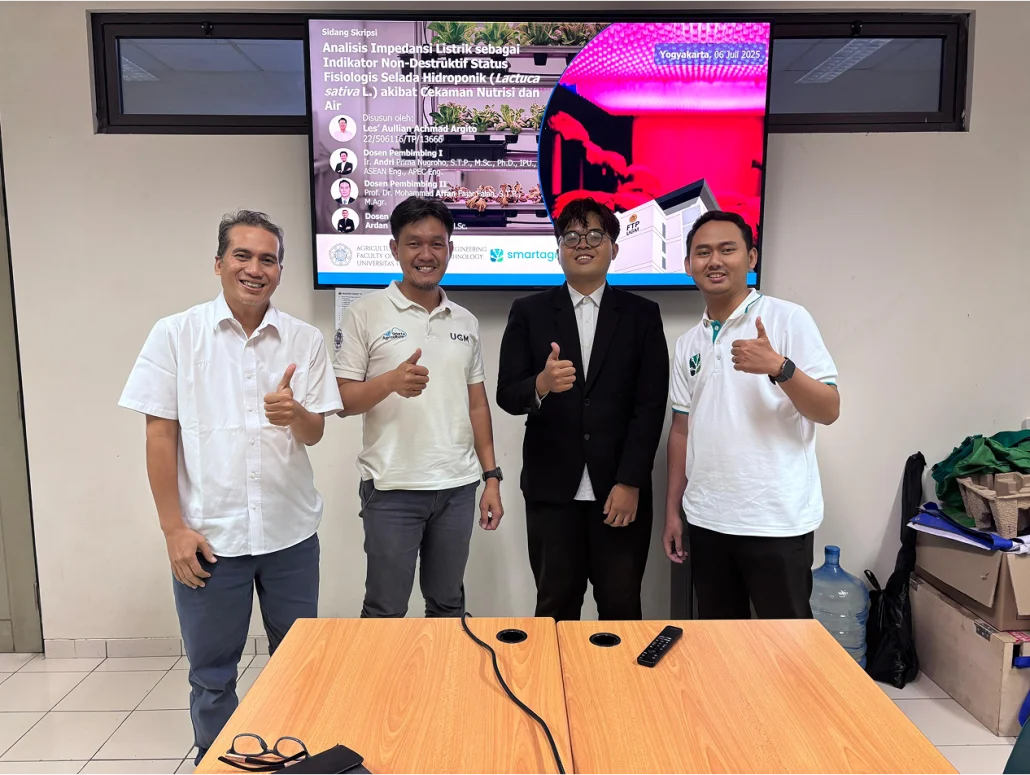
Les' Aullian A., S.T.P. completed research titled "Analysis of Electrical Impedance as a Non-Destructive Indicator of Physiological Status of Hydroponic Lettuce (Lactuca sativa L.) Due to Nutrient and Water Stress". This research demonstrated that electrical impedance measurement can be used as a nondestructive indicator to detect the physiological status of hydroponic lettuce plants experiencing nutrient and water stress. Les' Aullian was supervised by Ir. Andri Prima Nugroho, M.Sc., Ph.D. and Prof. Dr. Mohammad Affan Fajar F., M.Agr., with Ardan Wiratmoko, S.T.P., M.Sc. serving as examiner.
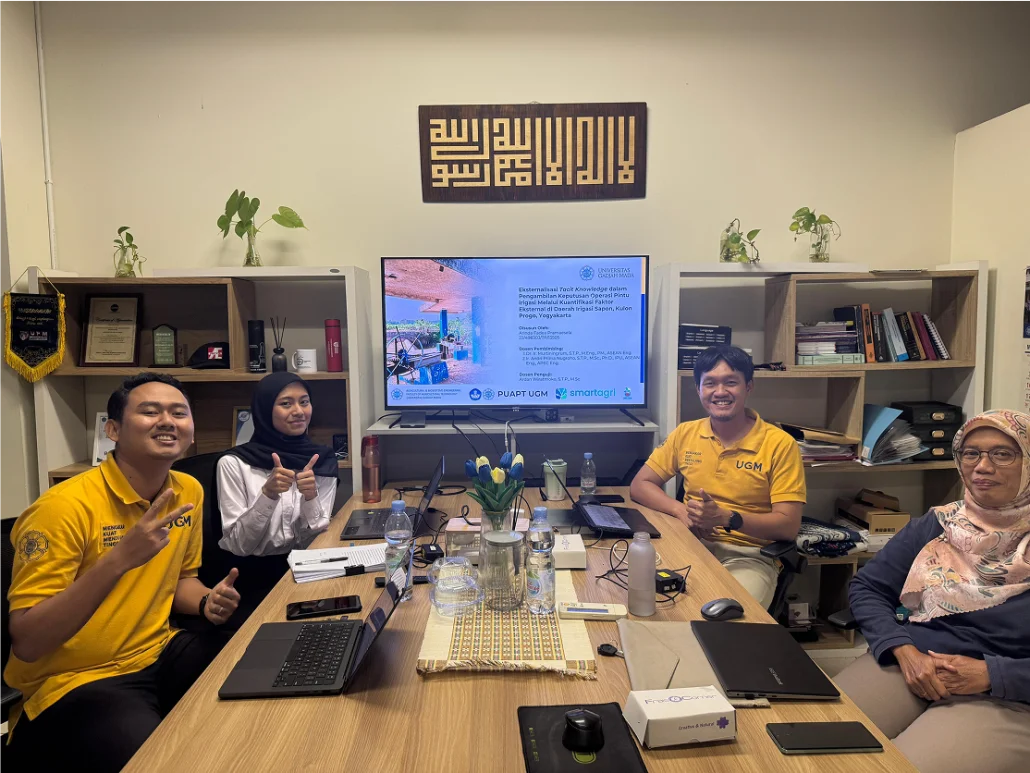
Arinda Fadea P., S.T.P. concluded the graduation series with research titled "Externalization of Tacit Knowledge in Irrigation Gate Operation Decision-Making Based on Quantification of External Factors in Sapon Irrigation Area, Kulon Progo, Yogyakarta". This research sought to document and measure the tacit knowledge of irrigation gate operators so that irrigation operational decision-making can be more standardized and measurable. Arinda was supervised by Dr. Murtiningrum, S.T.P., M.Eng. as the First Supervisor and Ir. Andri Prima Nugroho, M.Sc., Ph.D. as the Second Supervisor, with Ardan Wiratmoko, S.T.P., M.Sc. serving as examiner.
The success of these ten students in completing their research is inseparable from the support of various parties. Smart Agriculture Research Center extends sincere gratitude to the Inter-University Excellence Center (PUAPT) UGM for its support in providing research facilities and funding during the research process. Appreciation is also expressed to SINERGI (Integrated Technology Transfer-Based Research Commercialization Scheme), which has facilitated the commercialization of research results to provide broader benefits to the agricultural sector. Support from both programs has been instrumental in promoting the quality of student research while strengthening the ecosystem for smart agricultural technology innovation at the Smart Agriculture Research Center. We hope this synergy will continue and produce more innovations beneficial to the advancement of the agricultural sector in the future. This research also supports the achievement of the Sustainable Development Goals (SDGs), particularly SDG 2 (Zero Hunger) through improved agricultural productivity and quality, SDG 6 (Clean Water and Sanitation) through more efficient irrigation system innovation, and SDG 9 (Industry, Innovation, and Infrastructure) through the development of technology based on machine learning, sensors, and automation. Furthermore, this research aligns with SDG 12 (Responsible Consumption and Production) through optimizing water and energy resource use, SDG 13 (Climate Action) through more adaptive land and water management, and SDG 17 (Partnerships for the Goals).
Originally published on our previous site. Read the original