
Student Exchange
Kyushu University Students Visit Smart Agriculture Research Center UGM, Learn About Precision Agriculture Technology Implementation
By: M. Fajar Ridho Ilham
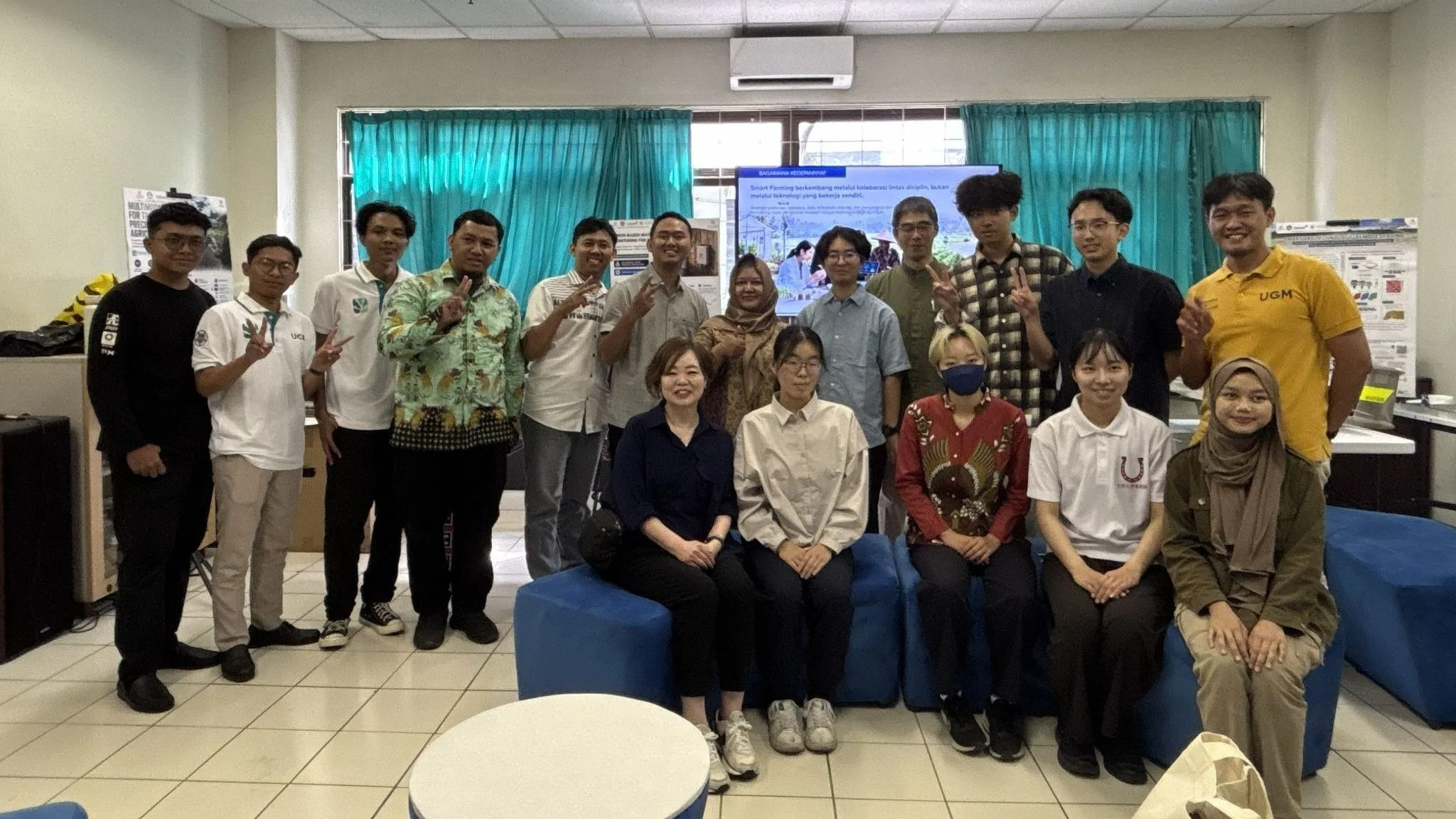
Yogyakarta, August 21, 2026. International collaboration in the development of precision agriculture technology continues to be strengthened through various academic exchange activities among universities. One such example is the visit of Kyushu University students from Japan to the Smart Agriculture Research Center, Faculty of Agricultural Technology (FTP) UGM, on Friday (21/8). This visit is part of a series of summer course programs organized by Kyushu University to introduce its students to the development of agricultural technology in tropical regions.
The delegation, consisting of six Kyushu University students, was directly accompanied by Takahiro Fujiwara, Ph.D., a Kyushu University lecturer who supervises the summer course program. Their presence in Yogyakarta is part of an academic visit agenda to learn more closely about the implementation of smart agriculture technology in Indonesia, while also broadening their understanding of tropical agriculture conditions and challenges directly in the field.
The visit was received by the Coordinator of Researchers at Smart Agriculture Research Center and Head of the Laboratory of Energy and Agricultural Machinery at FTP UGM, Andri Prima Nugroho, Ph.D. On this occasion, Andri introduced the activities of the Smart Agriculture Research Center, which focuses on the implementation of precision agriculture for tropical agriculture through the use of information technology and smart farming, from research development to field implementation.
![IMAGE_0]
Andri presented a number of leading research to the delegation, including the SIPASI irrigation decision support system that has been implemented in several irrigation areas in Indonesia to support modern water management. Additionally, Andri also explained the application of technology based on multispectral unmanned aerial vehicle (UAV) and machine learning to predict environmental stress on oil palm plantations, continuous soil moisture monitoring systems, and automatic palm tree population counting systems using deep learning. Not to be overlooked, smart greenhouse and plant factory technology that utilizes edge computing, Vapor Pressure Deficit (VPD) control, and thermal imaging to detect plant water stress also became topics of discussion.
![IMAGE_1]
![IMAGE_2]
One research that received special attention from the delegation was the development of digital peilschaal technology to measure irrigation water surface level on agricultural land based on computer vision and artificial intelligence (AI), a research result by Widi Kuntara Muladi Putra, S.T. under the guidance of Ir. Andri Prima Nugroho, Ph.D., and Dr. Murtiningrum, S.T.P., M.Eng. This technology works by recognizing the scale of peilschaal or water gauge boards through camera images, then converting the results of visual readings into water surface level data automatically and in real-time. This approach was developed to replace manual recording of irrigation water level, which has been prone to reading errors, while also supporting more precise, efficient irrigation water management decision-making that can be monitored remotely.
Fujiwara expressed his admiration for the developments achieved by Smart Agriculture Research Center UGM. He admitted to being truly amazed at the scope of research and technology that has been implemented to the level of field implementation. "Smart Agriculture Research Center UGM has developed very rapidly," said Fujiwara. He hopes that in the future smart agriculture can provide significant benefits to the agricultural sector, both in Indonesia and more broadly.
![IMAGE_3]
This summer course program was initiated by Kyushu University, among other reasons, to build student interest in Indonesia, both from social-cultural and technological development perspectives. Additionally, several students also showed special interest in smart agriculture research topics being developed at UGM. Fujiwara also conveyed his hope that this visit could serve as a gateway for further research collaboration between Kyushu University and Smart Agriculture Research Center UGM in the future.
The series of visits was then continued with a direct inspection to the Smart Agri Plant Factory UGM. In this session, Kyushu University students received explanations regarding plant factory technology developed at UGM, ranging from plant cultivation systems in controlled environments (controlled environment agriculture), adjustment of light intensity and planting lighting patterns (growlight), to real-time monitoring systems for nutrition and growing environmental conditions.
![IMAGE_4]
![IMAGE_5]
This visit opens opportunities to strengthen research and education cooperation between FTP UGM and Kyushu University, particularly in the development of precision agriculture technology for tropical regions. The exchange of knowledge and experience between the two institutions is expected to encourage further research collaboration, student exchange programs, and strengthening of international academic networks.
The activity simultaneously supports the achievement of the Sustainable Development Goals (SDGs), particularly through strengthening education and knowledge exchange across countries, development of precision agriculture technology to support productivity and water resource management, strengthening research innovation, and international collaboration between universities and education partners.
Linkage with SDGs
- SDG 2 – Zero Hunger: supports the development of productive and sustainable food production systems through precision agriculture and technology-based monitoring of land and crop conditions.
- SDG 4 – Quality Education: strengthens academic exchange and cross-country learning through summer course programs and research visits of Kyushu University students to UGM.
- SDG 6 – Clean Water and Sanitation: promotes more precise irrigation water resource management through the development of digital peilschaal technology based on computer vision and AI for water surface level monitoring.
- SDG 9 – Industry, Innovation, and Infrastructure: strengthens research and technology innovation through the use of UAVs, computer vision, machine learning, and plant factory systems in agriculture.
- SDG 17 – Partnership for the Goals: strengthens international research and education cooperation between FTP UGM and Kyushu University in the development of sustainable agriculture technology.
Originally published on our previous site. Read the original