
Dr. Andri Prima Nugroho Leads AI Training Session on Policy Analysis and Decision-Making at Bappenas
 Smart Agriculture Research Center
 Workshop Training
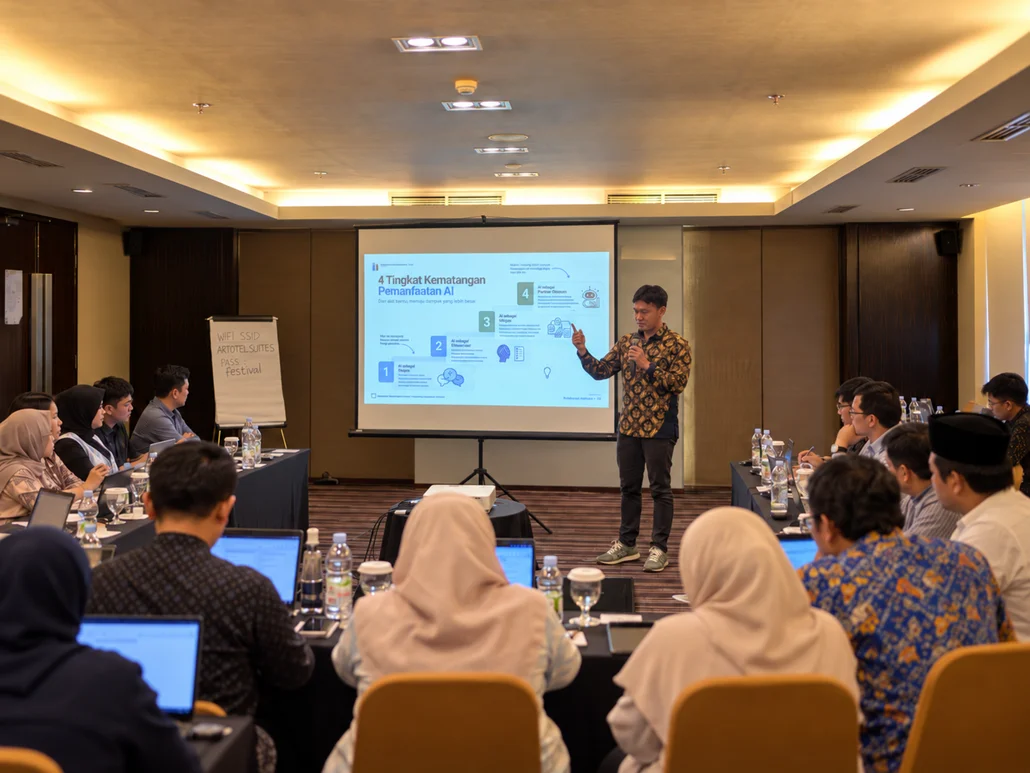
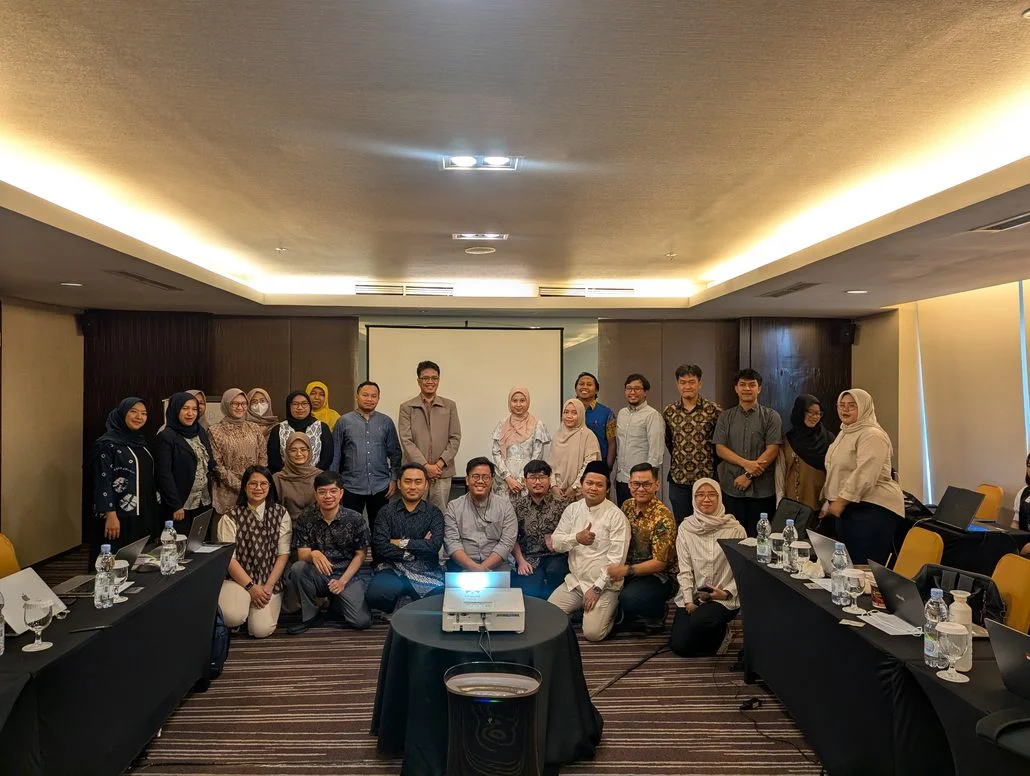
Yogyakarta, October 15–16, 2026 – Dr. Andri Prima Nugroho, lecturer at the Department of Agricultural and Biosystems Engineering, Faculty of Agricultural Technology at UGM, served as a resource person in the AI Capacity Building Bappenas 2026 program. Andri is also a researcher at the Smart Agriculture Research Center and Research Coordinator of UGM's flagship AI research at the Digital Transformation Bureau, UGM. This artificial intelligence (AI) training was designed to support development planning and strategic decision-making for participants from the Deputy for Human Development and Culture (PMK), Ministry of National Development Planning/Bappenas.
During the training series, Dr. Andri delivered material according to the established curriculum, covering prompt engineering for policy analysis and synthesis, prompt development practices, critical verification and evaluation of AI outputs, and governance and responsible AI use. The material was directed toward applying AI to assist analysis and document preparation work, while emphasizing evidence verification and human responsibility for decisions.
In the prompt practice session, participants were introduced to an approach that combines role, context, task, constraints, and verification. This structured approach helps guide AI to produce relevant outputs, while also making it easier for users to assess the basis and limitations of the results.
The verification session highlighted the importance of checking claims, figures, time periods, and original sources, as well as documenting verification status and corrections. Verified analysis results can then be forwarded as material for policy brief preparation, making recommendations easier to trace back to supporting evidence.
In the governance and responsible AI session, discussions covered accountability, roles and consent, and human oversight in AI deployment. AI was positioned as a support tool, not a replacement for the judgment and responsibility of officials or analysts.
As an enrichment to the material, Andri provided a demonstration of using Obsidian as a tool to assist individual knowledge management. Through this application, notes and reference materials can be organized as a source of knowledge that supports day-to-day work. The demo complemented the AI discussion with an information management approach that can be reused in analysis and writing processes.
The use of AI tools was also introduced to facilitate document preparation. Note and source management through Obsidian became part of the knowledge processing workflow, while AI helps users transform information into writing material. Checking against sources and user editing remain important steps before documents are used.
The training included practical activities that gave participants direct experience in applying the material. The combination of explanation, demonstration, and exercises gave participants the opportunity to try using the tools and connect the material to their work needs. In this way, participants gained practical experience alongside understanding the principles of AI deployment.
Through this training, participants are expected to be able to use AI in a more focused, critical, and responsible manner in supporting policy analysis and development planning.
Written bySmart Agriculture Research CenterOriginally published on our previous site. Read the original


