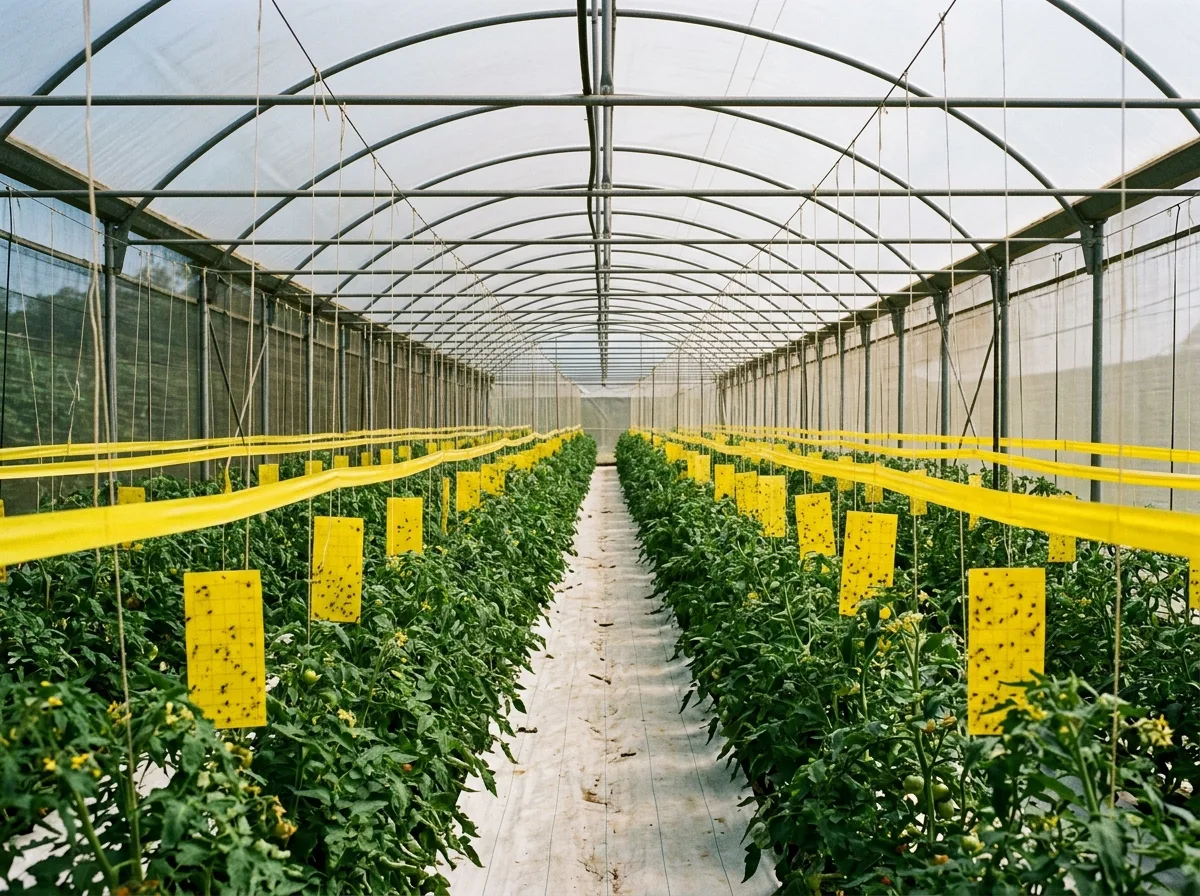
Integrated pest management
Exclusion first, biological control second, chemistry only as a last resort. In an enclosed system, prevention is far cheaper than any cure.
- Physical exclusion through netting, entry protocols, and screening
- Biological control agents released before pressure builds
- Targeted intervention thresholds instead of calendar spraying
Scouting and monitoring
Problems are cheap to fix while they are still small and local. Structured scouting, supported by imaging, finds them at that stage.
- Fixed scouting routes with recorded counts, not impressions
- Sticky traps mapped to locate pressure by zone
- Imaging and hyperspectral sensing to flag stress before symptoms are visible
Hygiene protocol
Most outbreaks walk in on shoes, hands, and tools. A hygiene protocol is the least glamorous and highest-return part of crop protection.
- Controlled entry with footbaths, clothing, and hand hygiene
- Tool disinfection between rows and between blocks
- Full clean-down and disinfection between crop cycles
Pollination
Enclose a crop and you also exclude its pollinators. Fruit set then becomes something the grower has to plan for deliberately.
- Managed bumblebee or stingless bee colonies inside the structure
- Mechanical and airflow-assisted pollination where colonies are impractical
- Climate held within the window where pollen stays viable