
Conference
Connecting Plant Physiology and Precision Agriculture: Dr. Andri Prima Nugroho as Plenary Speaker at MSPPC 2026 in Malaysia
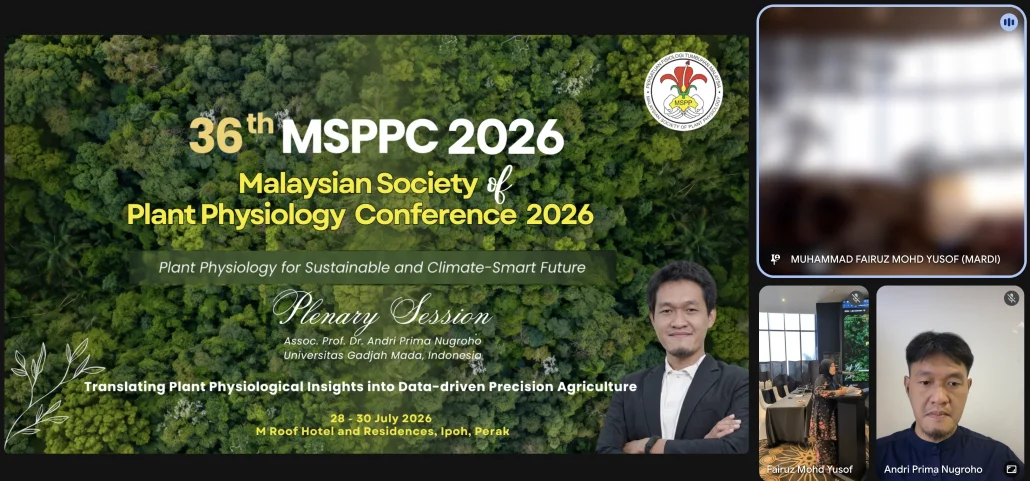
Yogyakarta, July 28, 2026 – Ir. Andri Prima Nugroho, S.T.P., M.Sc., Ph.D., IPU., ASEAN Eng., APEC Eng., lecturer and researcher at the Department of Agricultural Engineering and Biosystems, Faculty of Agricultural Technology, Universitas Gadjah Mada (UGM), served as one of the plenary speakers at The 36th Malaysian Society of Plant Physiology Conference (MSPPC 2026). This international conference was held by the Malaysian Society of Plant Physiology (MSPP) on July 28–30, 2026, at M Roof Hotel, Ipoh, Perak, Malaysia.
With the theme "Plant Physiology for Sustainable and Climate-Smart Future," MSPPC 2026 served as a scientific forum for researchers, academics, practitioners, and stakeholders to discuss developments in plant physiology and its contribution in addressing climate change challenges and sustainable agricultural production.
On this occasion, Dr. Andri Prima Nugroho delivered a plenary presentation titled "Translating Plant Physiological Insights into Data-Driven Precision Agriculture." The presentation was delivered in a hybrid format through a recorded presentation followed by a live discussion session with conference participants.
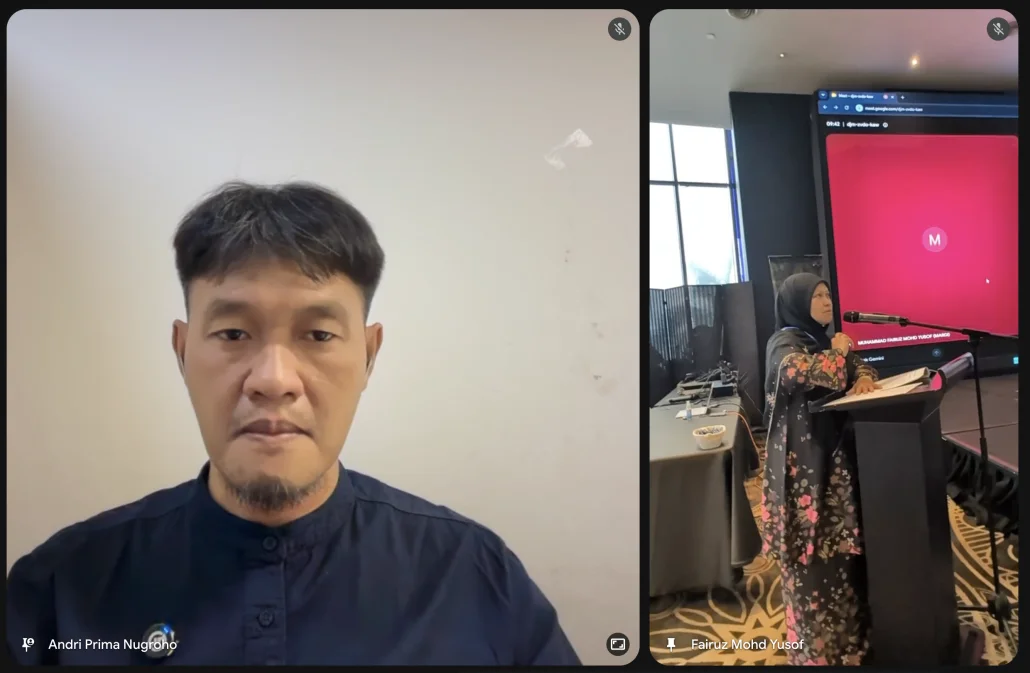
Through his presentation, Dr. Andri explained that plant physiological information plays an important role in the development of precision agriculture. Parameters such as leaf chlorophyll content, stomatal conductance, electron transport rate, and chlorophyll fluorescence can provide information about plant responses to environmental conditions and stresses.
However, direct physiological measurements in the field generally require time, specialized equipment, and adequate sample numbers. Therefore, an approach is needed that can expand information from measurements at the individual plant level to a picture of plant conditions at the field scale.
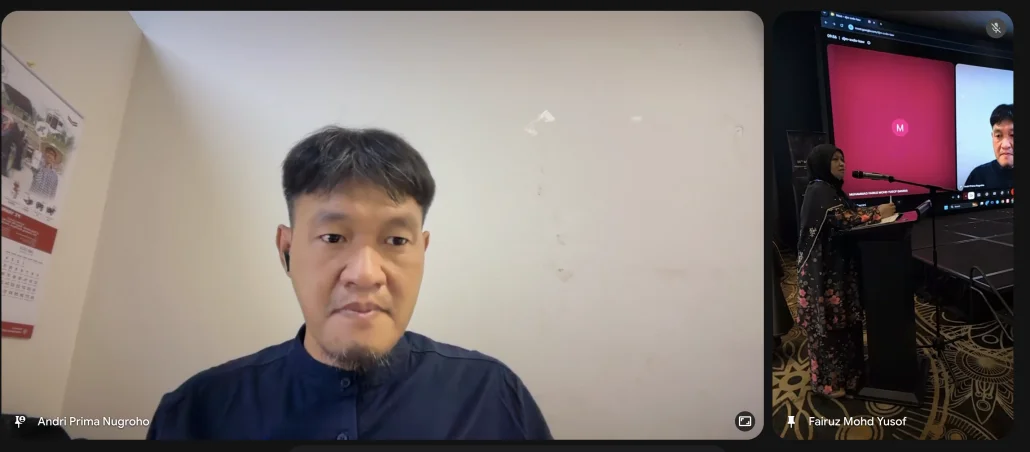
Dr. Andri presented how plant physiological data can be integrated with multispectral imagery obtained using unmanned aerial vehicles or drones. The combination of these two data sources is then analyzed through data-driven modeling to identify spatial variations in plant conditions and support more accurate cultivation decision-making.
One case study presented was the development of a papaya plant health evaluation system using multispectral imagery from a vertical take-off and landing (VTOL) unmanned aerial vehicle. Aerial image data was combined with results from physiological measurements in the field to build a predictive model of plant conditions.
This approach demonstrated that remote sensing technology is not only used to generate field imagery, but can be developed as a tool to translate plant biological responses into information that is easier to map and use. Thus, plant conditions initially observed through point measurements can be developed into spatial information to help determine areas that require attention or further intervention.
In his presentation, Dr. Andri also introduced the Smart Agriculture Research Center UGM as a research center developing and adapting precision agriculture technology for tropical agriculture characteristics. Various research activities are developed through the integration of sensors, Internet of Things, drone imagery, artificial intelligence, decision support systems, as well as agronomic and plant physiological knowledge.
Technology development at the Smart Agriculture Research Center UGM is not only directed at device sophistication. Technology must be built based on field needs, validated using actual data, and translated into recommendations that can be understood and used by farmers, land managers, and decision-makers.
The discussion session proceeded interactively with questions about imaging technology application in plantation areas, implementation of research results in field conditions, selection of plant physiological parameters, and development and validation of predictive models. The discussion demonstrated the importance of cross-disciplinary collaboration between plant physiology, agricultural engineering, remote sensing, and data science.
Dr. Andri Prima Nugroho's participation as a plenary speaker at MSPPC 2026 strengthens UGM's contribution to the development of precision agriculture and smart agriculture at the international level. This activity also opens opportunities for collaboration between UGM and the plant physiology research community, particularly in developing agricultural technology that is adaptive to climate change and suited to tropical agriculture characteristics.
Support for the Sustainable Development Goals (SDGs)
UGM's involvement in The 36th Malaysian Society of Plant Physiology Conference supports a number of Sustainable Development Goals (SDGs), namely:
– SDG 2: Zero Hunger The development of precision agriculture based on plant physiological conditions supports increased productivity, efficient input use, and sustainable food production.
– SDG 4: Quality Education This international scientific forum serves as a means of knowledge exchange and strengthening competencies for academics, researchers, students, and practitioners in plant physiology and agricultural technology.
– SDG 9: Industry, Innovation, and Infrastructure The integration of sensors, drone imagery, data processing, and predictive modeling promotes the development of innovations and digital infrastructure to support the transformation of the agricultural sector.
– SDG 13: Climate Action More precise monitoring of plant physiological responses and field conditions helps develop agricultural production strategies that are adaptive to climate change.
– SDG 17: Partnerships for the Goals This scientific meeting strengthens networks and opportunities for international collaboration between UGM, the Malaysian Society of Plant Physiology, and researchers and practitioners from various institutions.
Through this activity, it is hoped that the integration of plant physiology knowledge, remote sensing technology, and data analysis can continue to be developed into precision agriculture solutions that are not only scientifically sound, but also practical, sustainable, and able to address tropical agriculture challenges amid climate change.
Originally published on our previous site. Read the original