
Conference
Smart Agriculture Researcher, Dr. Andri Prima Nugroho, Presents Air Quality Decision Support System at International Conference ICOEE 2026 in Bali
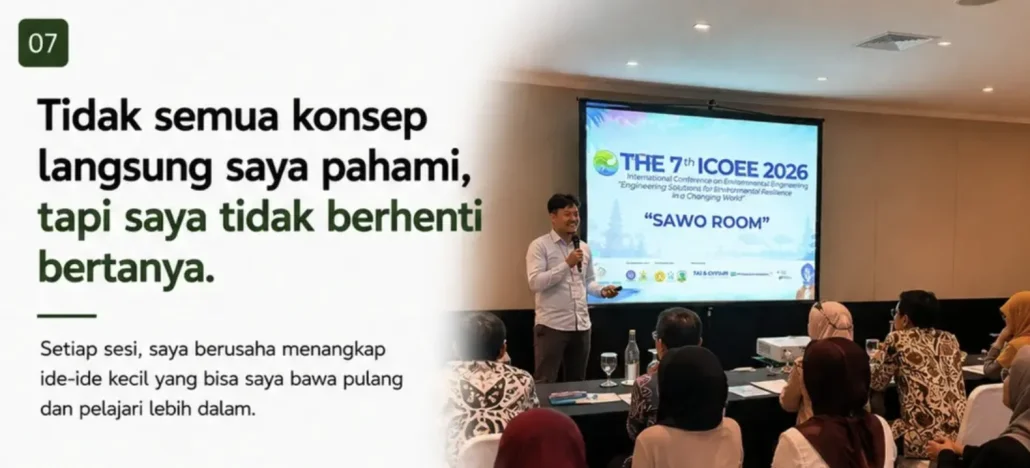
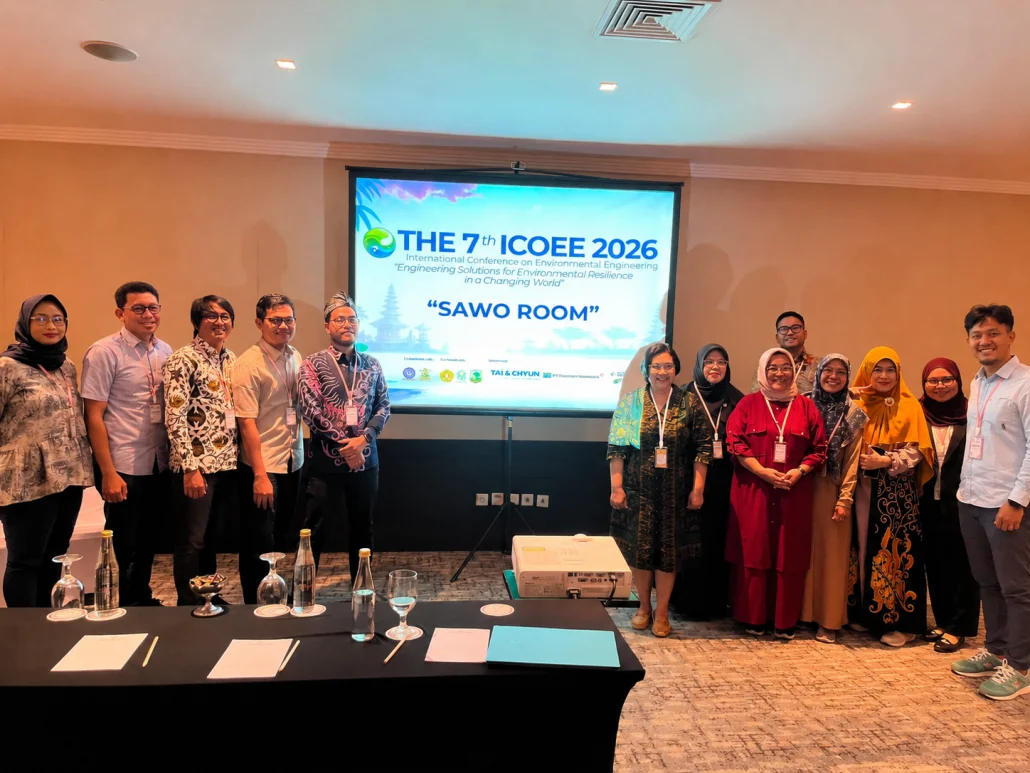
Bali, July 31, 2026 — Dr. Andri Prima Nugroho, S.T.P., M.Sc., Ph.D., lecturer at the Department of Agricultural and Biosystems Engineering, Faculty of Agricultural Technology, Universitas Gadjah Mada, and researcher at Smart Agriculture Research Center UGM, participated in The 7th International Conference on Environmental Engineering (ICOEE 2026). The conference, themed "Engineering Solutions for Environmental Resilience in a Changing World," was held by Institut Teknologi Sepuluh Nopember (ITS) together with a number of partner universities at Bintang Bali Resort, Kuta, Bali, on July 30–31, 2026.
ICOEE 2026 served as an international scientific forum for academics, researchers, practitioners, and stakeholders to exchange ideas on various engineering solutions in addressing climate change and environmental issues. The conference was also aimed at strengthening academic networks, cross-country research collaboration, and development of more adaptive and evidence-based environmental solutions.
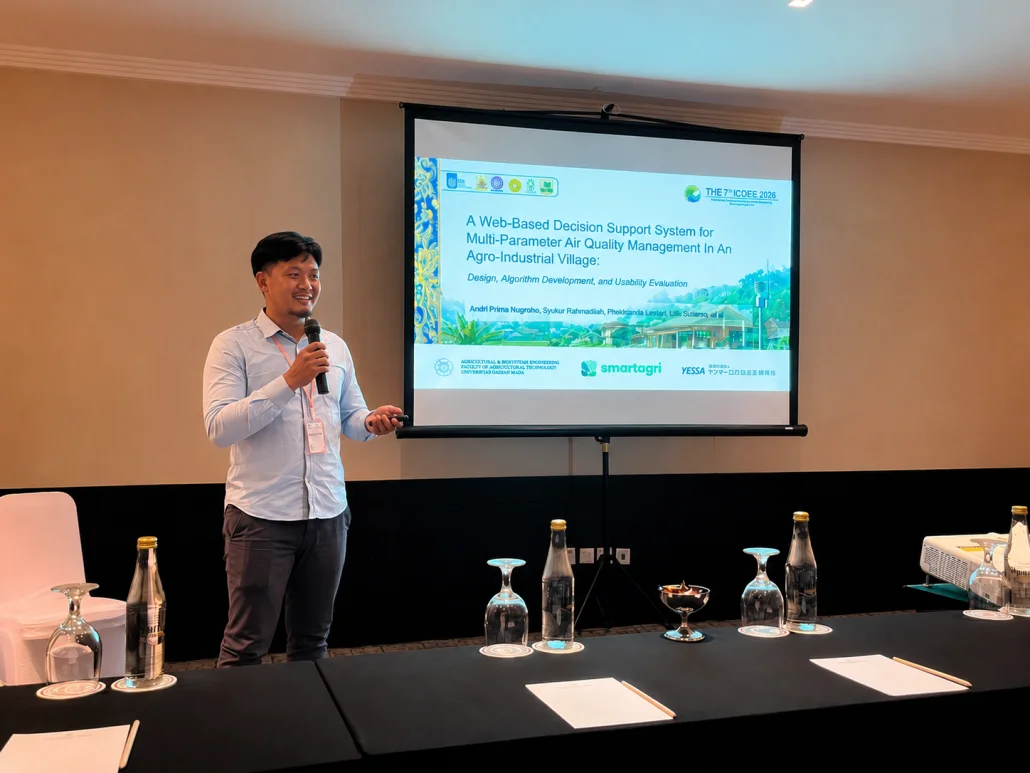
At the conference, Dr. Andri presented research titled "A Web-Based Decision Support System for Multi-Parameter Air Quality Management in an Agro-Industrial Village." The paper was presented under the theme Environmental Instrumentation, Modelling, and Decision Support Systems, which encompasses environmental instrumentation, modeling, artificial intelligence, Internet of Things, and decision support systems for environmental policy.
This research arose from the challenge of air quality monitoring systems in rural agro-industrial areas, which typically only produce raw data from sensors but lack analysis mechanisms to support decision-making. This situation was found in Sambak Village, Kajoran District, Magelang Regency, Central Java, which is one of the villages under the Program Kampung Iklim (ProKlim) and hosts a number of small-scale tofu industries.
Burning activities using wood and management of organic liquid waste in tofu industries have the potential to produce particulates, carbon dioxide, and methane. To enhance the usefulness of monitoring data, the research team developed DSS Air Quality, a web-based decision support system capable of processing sensor data into air quality category information, warnings, and recommendations according to user needs.
The system integrates several air quality and safety assessment references, namely the Air Pollutant Standard Index based on the Regulation of the Minister of Environment and Forestry Number P.14 Year 2020 for PM₂.₅ and PM₁₀, WHO-based reference thresholds for CO₂, and NIOSH references used in the research to evaluate CH₄ concentration. The system is also equipped with a linear interpolation algorithm with a data loss tolerance threshold of 25 percent to enable analysis to continue even when sensor readings are disrupted.
DSS Air Quality was designed for four user groups: administrators, government agencies, business owners, and the general public. Through this differentiation of access rights, the information generated can be utilized according to each role, from data management to environmental condition monitoring and transmission of recommendations.
System validation was performed using sensor data over 78 days, from July to September 2024, at a tofu industry owned by Pak Kosim in Sambak Village. Analysis results showed that PM₂.₅, PM₁₀, and CO₂ concentrations during the observation period remained in the safe category based on the references used in the research. However, the system detected CH₄ concentrations exceeding the reference value, with initial concentration reaching 2,283.82 ppm or approximately 2.28 times the 1,000 ppm threshold used in the study.
Further monitoring revealed that the increase in CH₄ persisted throughout the observation period. This condition is suspected to be related to the anaerobic decomposition process of tofu liquid waste that continues continuously. Daily pattern analysis also showed that CH₄ concentrations remained high at various times within the production cycle, indicating the presence of a structural exposure risk rather than a mere temporary occurrence.
In addition to algorithm validation, this research evaluated system ease of use through the System Usability Scale method with 14 respondents from various user groups. Testing yielded a score of 72.68, which falls in the acceptable category, Grade B−, with an adjective rating of "Good". The results demonstrate that the system is sufficiently user-friendly, though there remain opportunities for developing the interface, user guidance, and more contextual recommendations.
The presentation received comments and feedback from Prof. Dr. Sadhan Kumar Ghosh, one of the plenary speakers at ICOEE 2026. Prof. Ghosh is the Director General and Distinguished Professor at the Sustainable Development and Circular Economy Research Centre, International Society of Waste Management, Air and Water (ISWMAW), India, and former Dean of the Faculty of Engineering and Technology and former Professor and Head of the Department of Mechanical Engineering at Jadavpur University, India.
In the discussion session, Prof. Ghosh paid special attention to the development of DSS Air Quality and encouraged the system to be strengthened through more comprehensive study of international air quality standards. This input is important for expanding the system's relevance, strengthening the basis for determining thresholds and recommendations, and opening opportunities for applying the DSS to areas and agro-industrial characteristics that differ.
Dr. Andri stated that participation in this conference provided an opportunity to gain a cross-disciplinary perspective on the development of environmental monitoring and decision-making technology.
"Feedback from the experts becomes an important part of refining DSS Air Quality, particularly to strengthen the linkage between sensor data, air quality standards, and recommendations that can be implemented by village governments, business actors, and communities," Andri explained.
The participation of the Department of Agricultural and Biosystems Engineering lecturer at UGM in ICOEE 2026 is expected to expand the contribution of agricultural and biosystems engineering in addressing environmental issues in agro-industrial areas. In addition to strengthening international academic networks, this forum is expected to open opportunities for research collaboration in developing environmental monitoring systems, IoT-based sensors, data analytics, and decision support systems that meet community needs.
The development of DSS Air Quality also reflects the importance of a multidisciplinary approach in managing the environmental impacts of agro-industries. Technology is directed not only toward collecting data, but also toward translating that data into information and recommendations that can support concrete action at the local level.
The research activities and participation in this conference were carried out with support from the Yanmar Environmental Sustainability Support Association (YESSA), the Department of Agricultural and Biosystems Engineering at the Faculty of Agricultural Technology of Universitas Gadjah Mada, Smart Agriculture Research Center UGM, and the Sambak Village Government, Kajoran District, Magelang Regency. This support encompassed system development, implementation of field research, and facilitation of research results dissemination in international scientific forums.
Originally published on our previous site. Read the original