
Conference
DTPB UGM Lecturer Becomes Resource Person for Udayana University Student Creativity Program, Promoting Climate-Smart and Precision Agriculture Innovation
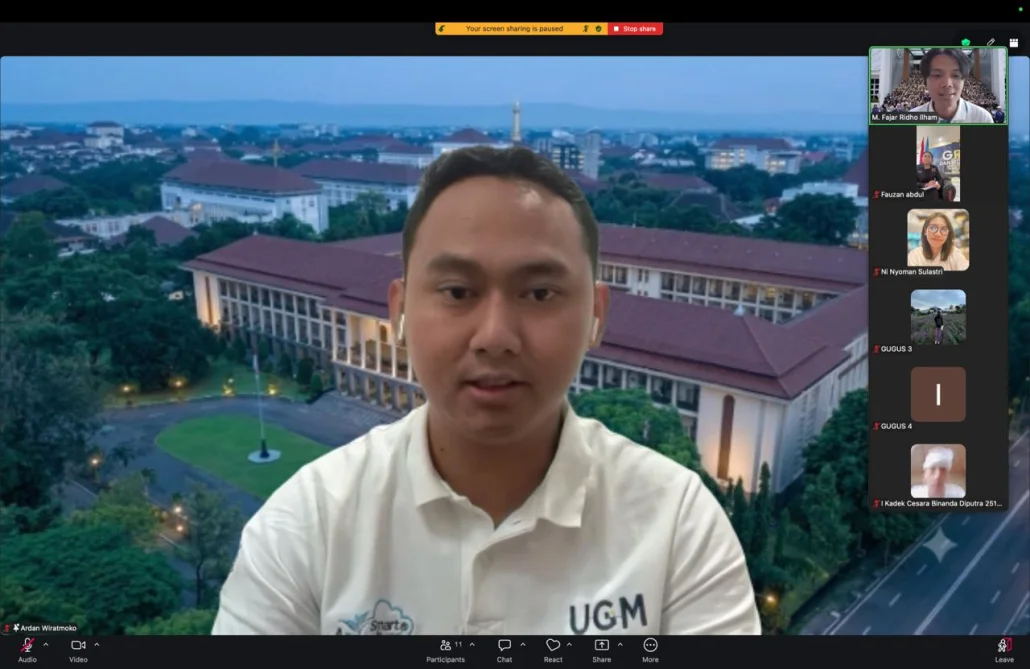
Bali, August 22, 2026 – Ardan Wiratmoko, S.T.P., M.Sc., a lecturer at the Department of Agricultural and Biosystems Engineering (DTPB), Faculty of Agricultural Technology at Gadjah Mada University, served as a resource person in the "From Campus Innovation to Future Career: Student Creativity Program in Support of Climate Smart Agriculture and Precision Agriculture" activity organized by the Agricultural and Biosystems Engineering Study Program, Faculty of Agricultural Technology, Udayana University, Saturday, August 22, 2026. The activity was held in hybrid format through Zoom Meeting and JA Building, Bukit Jimbaran Campus, Badung, Bali.
The activity was part of Udayana University's efforts to enhance student creativity, innovation, and competitiveness through the Student Creativity Program (PKM). In this activity, Pak Ardan shared perspectives on how students can develop innovative ideas relevant to the challenges of agriculture in the future.
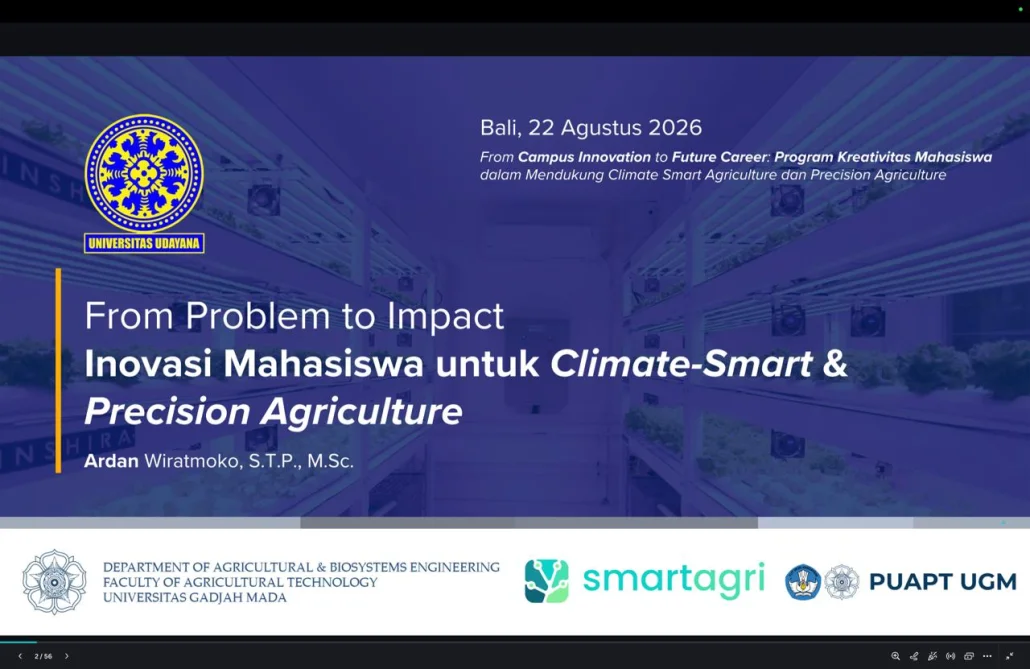
In his presentation titled "From Problem to Impact: Student Innovation for Climate-Smart & Precision Agriculture", Pak Ardan emphasized the importance of beginning innovation from real-world problems. This topic also aligns with various research and development activities conducted by the Smart Agriculture Research Center UGM. Students are encouraged not only to generate ideas that are academically interesting, but also to design solutions that have a scientific basis, can be tested, meet user needs, and have the potential to create real impact for the agricultural sector.
"Good innovation is not merely started from sophisticated technology, but from our ability to understand problems correctly. Students need to learn how to transform field problems into ideas, research, prototypes, and ultimately solutions that deliver real impact," said Pak Ardan.
The material also highlighted opportunities for PKM development in the fields of climate-smart agriculture and precision agriculture, including through the use of sensors, Internet of Things (IoT), remote sensing, automation, artificial intelligence, and decision support systems. This approach is considered increasingly relevant to address agricultural challenges, such as efficient water and input use, adaptation to climate change, productivity improvement, and more precise and sustainable agricultural resource management.
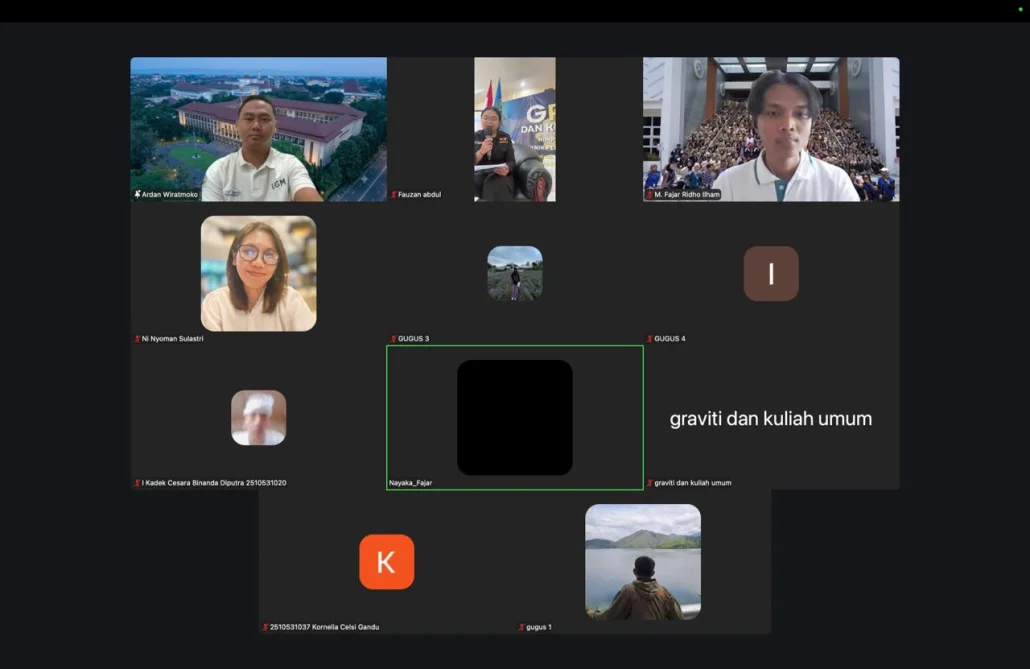
In addition to the academic perspective and technology development presented by Pak Ardan, the activity also featured M. Fajar Ridho Ilham, S.T.P. who shared his experience regarding his journey in the Student Creativity Program (PKM) through the National Student Scientific Week (PIMNAS). This experience gave students an understanding of the process involved in developing PKM ideas, building teamwork, implementing programs, and bringing student works to the national scientific level competition.
Through these two perspectives, participants gained an understanding that PKM is not only a student competition, but can also serve as a learning space to develop research capabilities, creativity, scientific communication, teamwork, and the courage to move an idea toward more concrete implementation.
Pak Ardan added that student involvement in PKM can be one means of building innovative thinking while preparing students' professional competencies.
"PKM can serve as an initial laboratory for students to learn teamwork, develop data-based solutions, test ideas, and communicate results. This experience is highly relevant when students later enter the world of research, industry, or establish technology-based enterprises," added Pak Ardan.
This activity was also part of the Pra Gema Kreativitas dan Ilmiah (GRAVITI) and Public Lecture 2026 organized by the Student Association of Agricultural and Biosystems Engineering together with the Agricultural and Biosystems Engineering Study Program, Faculty of Agricultural Technology, Udayana University. DTPB UGM's involvement in this activity also strengthens academic relationships between higher education institutions in student capacity development as well as knowledge exchange in the field of agricultural and biosystems engineering.
This activity also supports the achievement of the Sustainable Development Goals (SDGs), particularly SDG 2: Zero Hunger through the development of productive and sustainable agricultural innovation; SDG 4: Quality Education through enhancing student creativity and capacity; SDG 9: Industry, Innovation, and Infrastructure through the development of agricultural technology; SDG 13: Climate Action through strengthening the climate-smart agriculture approach; and SDG 17: Partnerships for the Goals through collaboration between higher education institutions in education, innovation, and human resource development.
Originally published on our previous site. Read the original