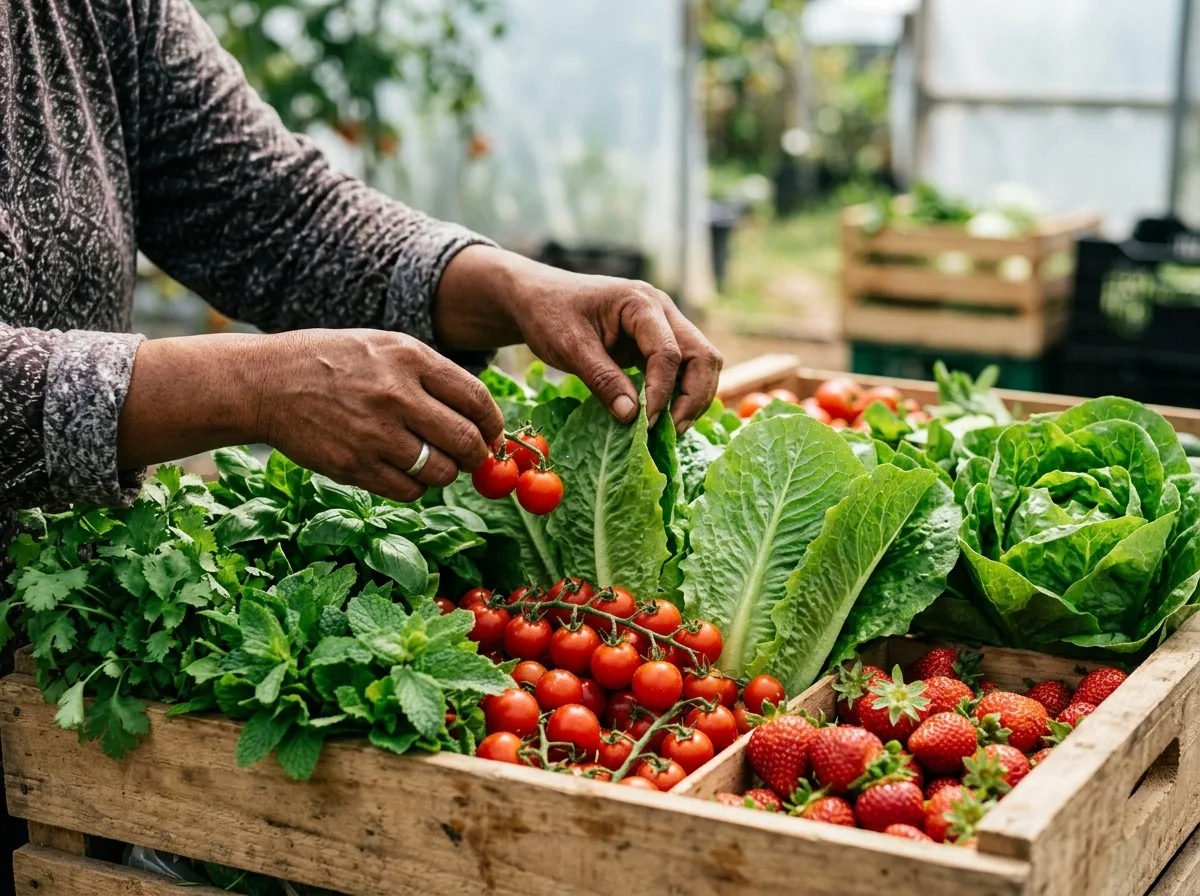
Crop choice drives everything downstream: the structure, the climate strategy, the irrigation design, and whether the numbers work at all.
Photo: crop and market fit
Match the crop to the market
A controlled environment only pays for itself when the crop commands a premium. The question is not what grows best, it is what sells best near you.
Leafy greens and herbs for urban food service, hotels, and modern retail
Tomato and strawberry where consistent grade and year-round supply carry a price premium
Off-season production, when open-field supply drops and prices climb
Match the crop to the climate
Indonesia is not one climate. A crop that thrives on a highland site may need active cooling and dehumidification in the lowlands, which changes the whole capital plan.
Highland sites: cool nights do much of the work, so passive ventilation goes further
Lowland sites: heat and humidity are the binding constraints, not cold
Cool-preferring crops (lettuce, strawberry) carry the highest climate cost at low altitude
Cycle time and cash flow
Short-cycle crops return cash and, just as importantly, knowledge faster. Long-cycle crops reward operators who already have their protocols under control.
Leafy greens turn over in weeks, so a mistake costs one cycle, not one season
Fruiting crops run for months and demand steadier climate and nutrition control
Many operations start short-cycle, then graduate to fruiting crops
Prove it in a trial first
We would rather run one instrumented season at small scale than design a large facility around assumptions. Trials turn opinions into numbers.
A small, fully sensored trial block before committing capital
Measured yield, quality, water, and energy per unit of production
A design brief written from your data, not from a brochure