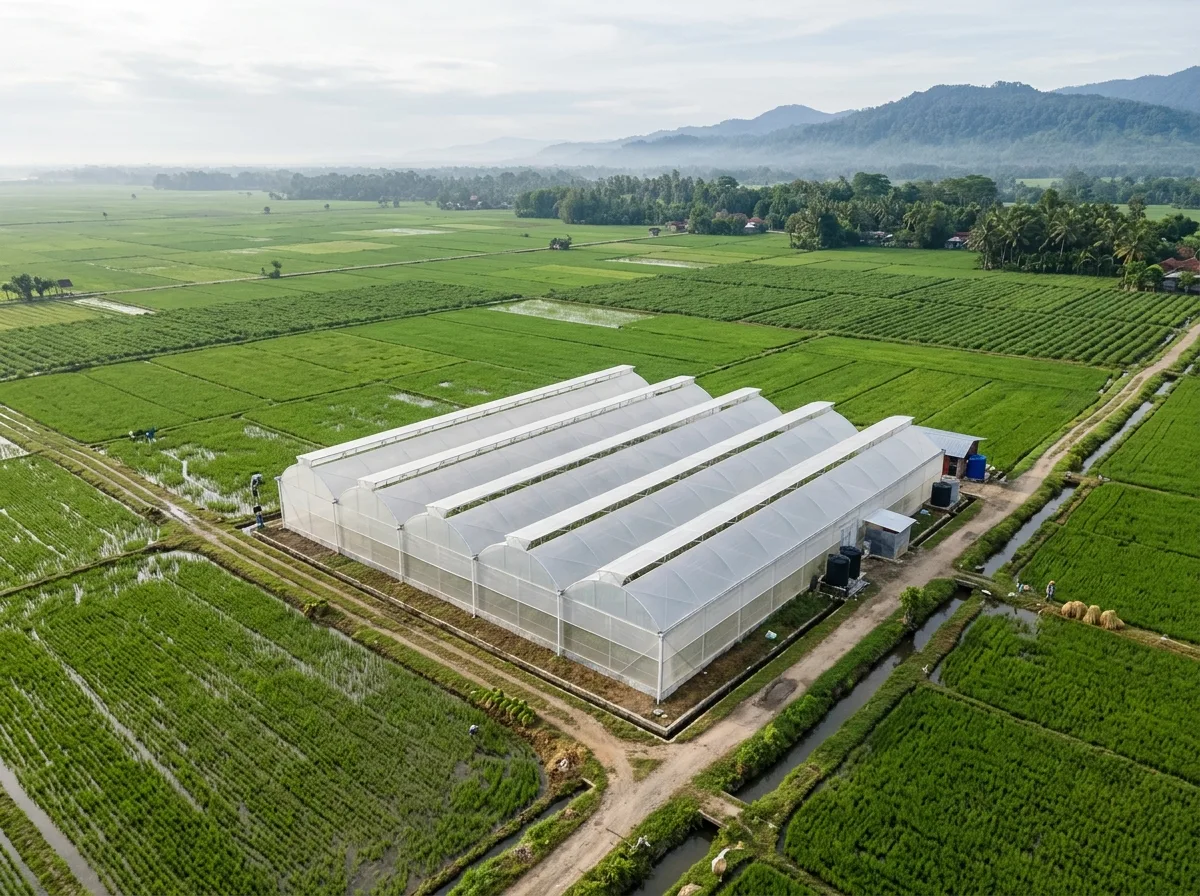
Site selection quietly sets your operating cost for the next decade. Altitude, water, power, and distance to market matter more than the shape of the roof.
Photo: site and climate
Altitude decides your climate strategy
Elevation is the single most useful piece of free cooling in the tropics. It determines whether you can ventilate your way to a good climate or must pay to condition the air.
Highland: natural ventilation and shading often suffice for much of the year
Mid-altitude: hybrid strategies, with cooling reserved for peak hours
Lowland: expect active cooling and dehumidification in the energy budget
Proximity to market
Fresh produce loses value by the hour. Being close to the buyer is a quality strategy as much as a logistics one.
Shorter cold chains protect shelf life and reduce rejection at delivery
Peri-urban sites trade land cost against freshness and transport
Plant factories can sit closest to the consumer because they need no land quality
Water and power
Water quality shapes the entire irrigation design, and power reliability determines how much automation you can safely depend on.
Source water tested first: salinity, hardness, iron, and pathogens
Rainwater harvesting as the cleanest and cheapest input where rainfall allows
Grid reliability, backup, and solar potential assessed before sizing controls
Site, drainage, and orientation
The land itself sets constraints that no controller can override: how water leaves, where wind comes from, and what shades you in the afternoon.
Drainage and flood history, especially on converted paddy land
Prevailing wind direction, which drives natural ventilation performance
Orientation and surrounding obstructions that affect light through the day