There is a spectrum between an open field and a fully closed plant factory. The right point on it is the one your crop, climate, and team can actually sustain.
Photo: level of control
Match the level of control to the goal
More control means more capital and more operating skill. The best system is the simplest one that reliably delivers the climate your crop needs.
Screenhouse: rain and insect exclusion at the lowest cost
Naturally ventilated greenhouse: real climate influence with modest energy use
Semi-closed greenhouse and plant factory: full control, highest capex and energy
Design for the tropics from the start
Here the problem is getting heat and moisture out, not holding them in. That single difference reshapes ventilation, screening, and the control strategy.
Humidity management, not heating, is the central design challenge
Vapour pressure deficit as the control target rather than temperature alone
Ventilation capacity and screening sized for tropical solar load
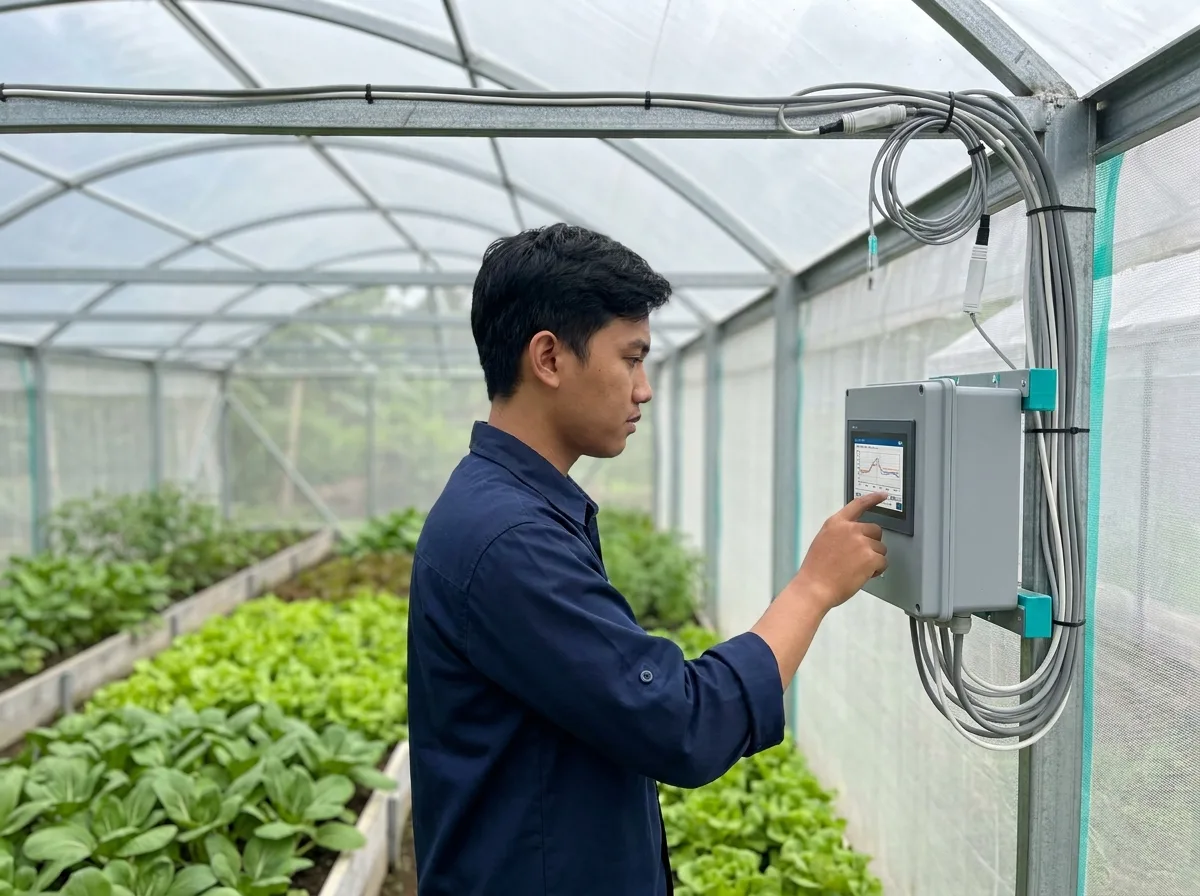
Instrument from day one
You cannot manage a climate you cannot see. Sensing and logging are not an upgrade to add later, they are how the system gets tuned.
Climate, root-zone, and light sensing logged continuously
Non-destructive plant measurement to catch stress before it shows
Dashboards that turn readings into a decision, not just a chart
Build the operating capability
A greenhouse is a skill, not a purchase. The facilities that succeed are the ones whose people know why the setpoints are what they are.
Written protocols for climate, irrigation, hygiene, and scouting
Training and joint operation during the first cycles
Reviews where the data, not the habit, sets the next season's plan