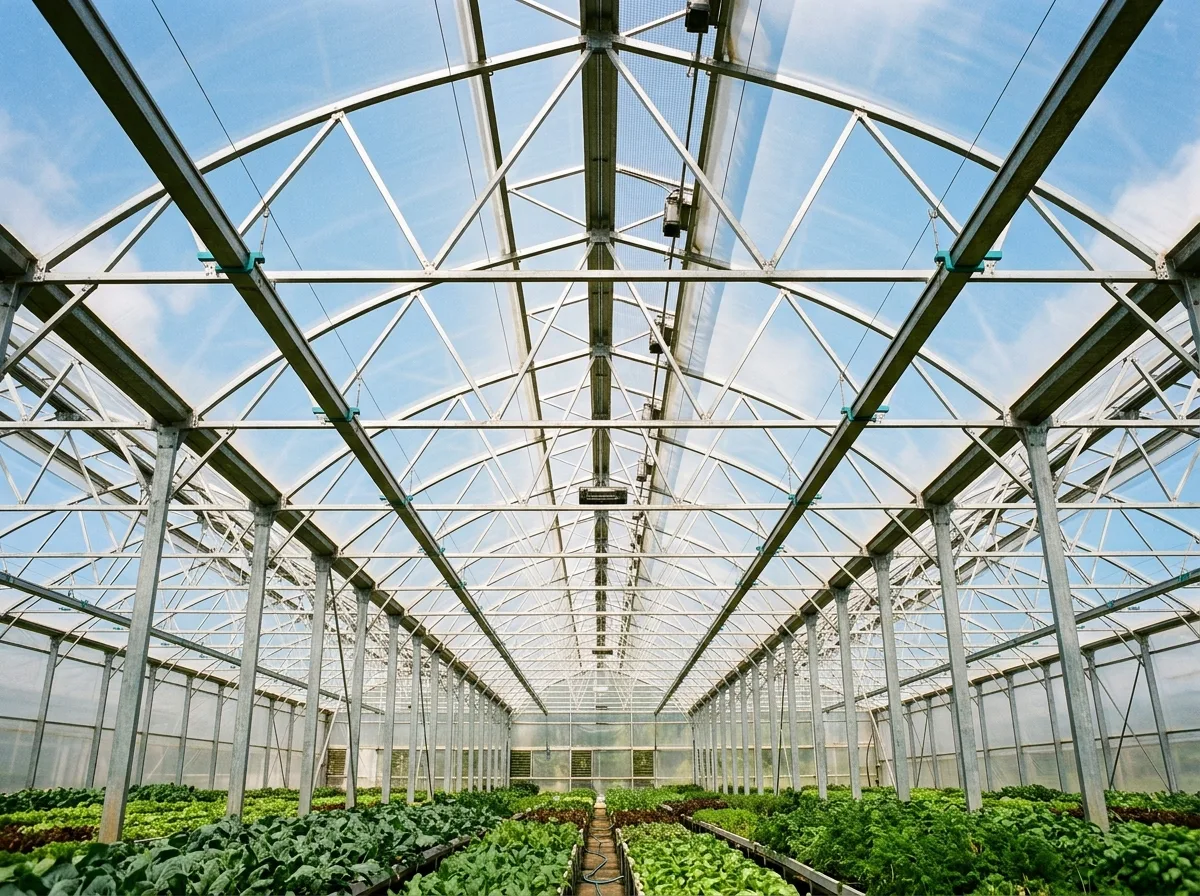
The building is a climate instrument. Its height, venting, and covering decide how much work the machinery has to do afterwards.
Photo: structure and envelope
Foundation
Tropical sites bring soft soils, heavy rain, and converted paddy land. The foundation has to handle settlement and water long before it handles wind.
Soil bearing assessment and settlement risk on converted land
Raised floor levels and drainage away from the growing area
Anchoring designed for uplift during storms
Steel structure
Gutter height is the most consequential number in the design. Taller houses hold a larger, more stable air buffer, which is exactly what a hot climate needs.
Generous gutter height for thermal buffering and light distribution
Spans and loading matched to wind and equipment suspended from the frame
Corrosion protection specified for humid, coastal conditions
Aluminium system
The glazing system is where a greenhouse leaks air, water, and money. Profiles and gaskets determine whether the structure holds the climate you paid to create.
Profiles carrying film, polycarbonate, or glass to suit budget and light needs
Sealing and condensation drainage detailed for high humidity
Serviceable components that can be replaced without dismantling bays
Ventilation
In the tropics, ventilation is the primary cooling system. Everything else is a supplement to it.
Roof and side vents sized for peak solar load, not average conditions
Layouts that use prevailing wind and stack effect together
Automated vent control responding to temperature, humidity, and rain
Insect netting
Netting is the cheapest crop protection available, and it always costs airflow. The design job is finding the balance that protects without cooking the crop.
Mesh selected against the target pests, from thrips upward
Vent area enlarged to compensate for the resistance the net adds
Inspection and repair routines, because one tear undoes the barrier
Service building
Grading, packing, storage, and hygiene control belong outside the growing area. Keeping them separate protects both the crop and the product.
Post-harvest handling and cold storage adjacent to the growing area
Irrigation room housing tanks, dosing, and filtration
Entry, changing, and hygiene control at a single point
Rainwater collection
A greenhouse roof is a large, clean catchment. In a high-rainfall country, that is the best irrigation water available and it arrives free.
Gutter and storage capacity sized to bridge the dry period
First-flush diversion and filtration before storage
Blending strategy with groundwater when reserves run low