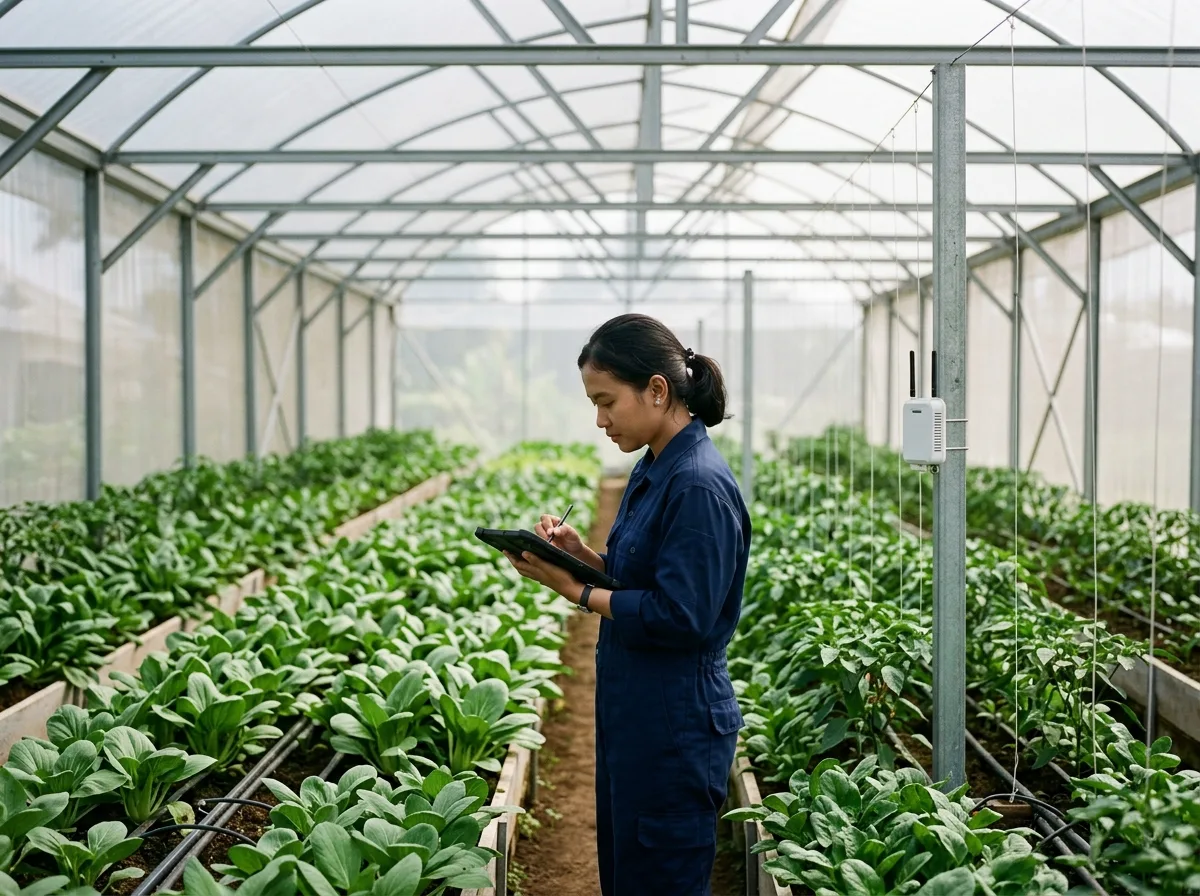
Controlled-environment agriculture is not a building type, it is a way of working. The structure, the climate system, the irrigation, and the data all serve one goal: putting the grower in charge of the environment instead of reacting to it.
Photo: fully managed environments
Designed as one system
Structure, climate, and irrigation constrain each other. Designing them separately is how facilities end up fighting themselves.
Ventilation capacity matched to the covering and the solar load
Irrigation strategy matched to the climate the house can actually hold
Control system specified alongside the hardware, not after it
Steer to a crop target
The setpoint is not a comfortable number, it is the condition the crop needs in order to transpire and grow steadily through the day.
Vapour pressure deficit held in the crop's working range
Root zone and canopy managed together, not in isolation
Strategy adjusted by crop stage rather than left fixed
Data at the centre
Continuous measurement is what turns a growing season into something you can review, explain, and improve.
Climate, root-zone, and light logged continuously
Non-destructive plant measurement to catch stress early
Season reviews where the data sets the next plan
Predictable output
The commercial value of control is not only higher yield, it is being able to promise a buyer a volume and a grade on a date.
Year-round production independent of the season
Consistent grade and quality that holds contracts
Planning that a cold chain and a buyer can rely on