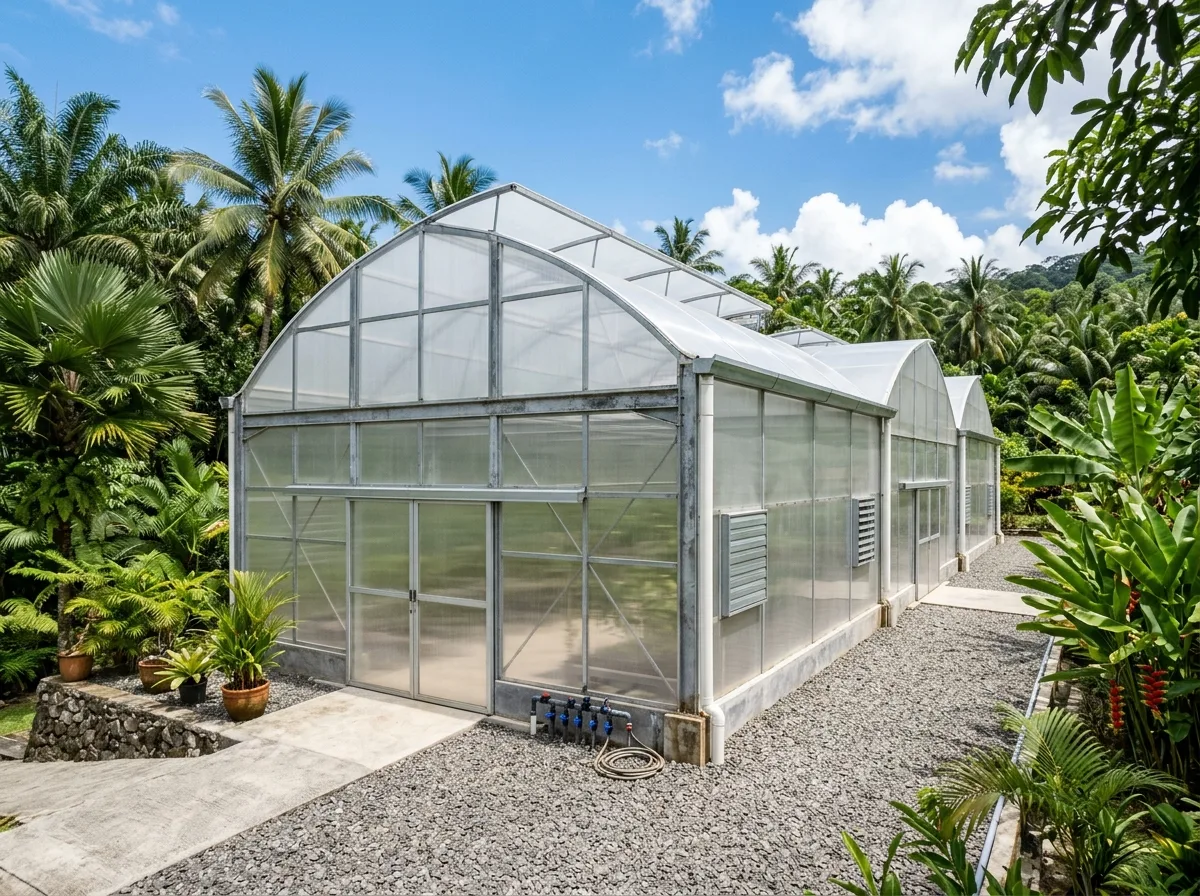
A steel greenhouse is the long-term option. It costs more at the start and gives back a structure that holds its shape, carries screens and irrigation, and can be upgraded rather than replaced.
Photo: permanent steel structures
Frame and service life
Hot-dip galvanised steel is specified for humid, sometimes coastal conditions where corrosion, not load, is what ends a structure's life.
Decades of service with low structural maintenance
Corrosion protection specified for humidity and salt air
Components replaceable without dismantling whole bays
Gutter height and climate
Height is the cheapest climate control there is. A taller house holds a larger air buffer, which softens the midday peak before any machinery runs.
Large air volume that buffers temperature swings
Better light distribution across the canopy
Room for screens, gutters, and high-wire crops
Covering choice
Film, polycarbonate, and glass differ in light transmission, lifespan, and cost. The right pick depends on the crop and how long the facility must last.
Film: lowest cost, periodic replacement
Polycarbonate: durable, good diffusion, mid cost
Glass: highest transmission and longest life, highest cost
Room to upgrade
A steel frame is worth specifying when you expect the operation to grow into more control than it starts with.
Screens, cooling, and CO2 added later without rebuilding
Loads for irrigation, lighting, and sensing designed in from the start