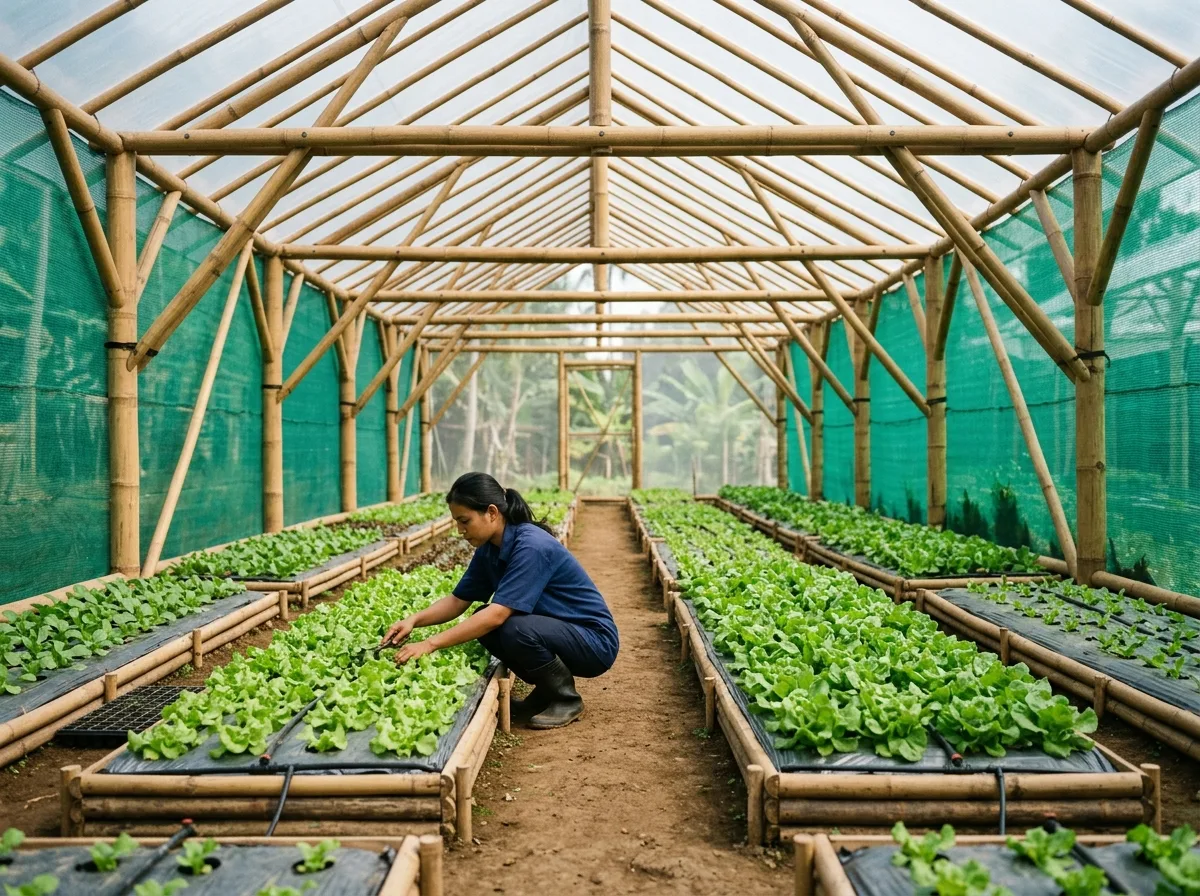
Not every grower needs, or can finance, a steel greenhouse. A well-built bamboo or timber structure delivers the two protections that matter most, rain exclusion and insect exclusion, at a fraction of the cost.
Photo: local-material structures
Local materials, local repair
A structure built from materials available nearby can be maintained by the people who use it, without waiting on a supplier.
Bamboo and timber sourced and worked locally
Repairs affordable and quick after storm damage
Construction skills that stay in the community
The two highest-return protections
Most of the yield and quality gain from growing under cover comes from keeping rain off the crop and insects out of it. Both are achievable cheaply.
Rain exclusion, which cuts foliar disease sharply
Insect netting, which reduces pest pressure and spraying
Shade management during the hottest part of the day
Honest limits
A low-cost structure is a first step, not a small greenhouse. It is important to be clear about what it will not do.
Shorter service life than steel, with periodic rebuilding
Limited climate control beyond ventilation and shading
Lower gutter height, so less thermal buffering
A realistic first step
For many farmer groups the right sequence is to learn protected cultivation cheaply, prove the market, and reinvest into a more capable structure.
Lower capital risk while the operation learns
Protocols and habits that transfer to a larger facility later